

New York City beckons teenagers with its energy and endless possibilities. Parents often wonder if there’s truly a safe way for teens to explore New York without constant worry. The answer is yes, but it requires the right approach, proper preparation, and sometimes the support of structured programs designed specifically for this age group.
This comprehensive guide provides everything you need to know about keeping teens safe while they experience the magic of New York City. You’ll discover practical safety strategies, learn about the best teen-friendly destinations, and understand why supervised exploration through programs like Camp New York offers the perfect balance of independence and security.
Whether you’re planning a family visit or considering a city-based summer camp for teens in New York, the information ahead will give you confidence in your decisions. Let’s explore how your teenager can experience New York safely, build independence, and create memories that last a lifetime.
Understanding Parent Concerns About NYC and Teen Safety
Every parent feels protective when imagining their teen navigating a bustling metropolis. These concerns are natural and valid. New York City represents both tremendous opportunity and understandable worry for families.
The size alone can feel overwhelming. With over eight million residents and millions more visitors, the sheer number of people in Times Square or on the subway during rush hour creates anxiety. Parents wonder how their teen will handle crowds, avoid getting separated from groups, or know which areas to avoid.
Public transportation raises specific concerns. The subway system spans hundreds of miles with 472 stations. Parents question whether their teen can navigate this complex network safely, especially after dark. Stories in the news about incidents on public transit amplify these worries, even though millions ride safely every single day.

Communication concerns also weigh heavily. What if your teen’s phone dies or loses signal? How will they reach you in an emergency? The thought of being unreachable creates real stress for parents accustomed to constant connectivity.
Street smarts matter more in cities than suburban environments. Parents worry their teen lacks the urban awareness to spot potential problems, handle panhandlers appropriately, or avoid common tourist scams. These skills develop with experience, but that first experience feels risky.
Yet here’s the reality that often surprises parents: New York City is actually one of the safest large cities in America. Crime rates have dropped dramatically over the past three decades. Millions of teens visit safely each year when they follow basic precautions and have appropriate supervision.
The key isn’t avoiding New York. It’s approaching exploration with proper structure, knowledge, and support systems that address these legitimate concerns while still allowing teens to gain independence and cultural enrichment.
Why New York City Can Be Safe for Teens with Proper Guidance
New York’s reputation as a dangerous place belongs to decades past. Today’s city offers a surprisingly safe environment for young people when approached correctly. Understanding why helps parents feel more comfortable about teen exploration.
The NYPD maintains the largest municipal police force in the United States. With over 36,000 officers, police presence remains visible throughout Manhattan and other boroughs. This visibility alone deters many problems and provides quick response when issues arise.
Tourist areas receive extra attention. Times Square, Central Park, major museums, and popular neighborhoods see constant police patrols. These high-traffic areas where teens typically spend time benefit from enhanced security measures that create safer environments than many suburban locations.
The Safety Infrastructure That Protects Visitors
Technology plays a huge role in modern NYC safety. Thousands of security cameras monitor public spaces. Subway stations have help points that connect directly to police and transit authorities. Cell phone coverage reaches almost everywhere, keeping communication lines open.
The subway system, despite parent concerns, operates as one of the world’s safest mass transit networks. Over five million people ride daily without incident. Transit police patrol trains and stations continuously. Emergency call boxes sit on every platform.
New Yorkers themselves contribute to safety. The city’s culture embraces helping lost tourists and watching out for young people. Store owners, museum staff, and regular commuters often assist teens who seem confused or need directions. This community awareness provides an informal safety net.
Statistical Reality Versus Perception
Crime statistics tell a reassuring story. New York City consistently ranks safer than many smaller American cities. The per-capita crime rate falls below the national average for major urban areas. Violent crime affecting tourists remains exceptionally rare.
Most safety issues teens might encounter are minor and preventable. Pickpockets target inattentive tourists in crowded areas. Scammers sell fake tickets or overpriced items. These nuisances rarely pose physical danger and are easily avoided with basic awareness.
The real difference between safe and unsafe experiences comes down to preparation and supervision. Teens who understand basic urban safety rules, travel in groups, stick to appropriate areas, and have adult oversight navigate New York City successfully every day. Those without guidance or structure face higher risk of minor problems that create stress.
This is precisely why structured programs make such a difference. Independent but supervised teen experiences in NYC combine the excitement of exploration with the safety nets that prevent most problems before they start.
Essential Safety Tips for Teens Exploring New York City
Practical knowledge dramatically reduces risk. These essential safety tips work for family visits, school trips, or city-based summer camp for teens in New York. Share them with your teen before any New York City experience.
Smart Phone and Valuables Management
Phones serve as lifelines in the city but also attract unwanted attention. Teens should keep phones partially charged at all times and carry portable battery packs. Using phones while walking makes you an easy target for theft. Step to the side, stand near a building, and stay aware when checking directions or sending messages.
Valuables should stay hidden. Expensive jewelry, designer items, and large amounts of cash draw attention. Teens should carry only what they need for the day in front pockets or secure cross-body bags. Backpacks work fine but should be worn on both shoulders in crowded areas.
Emergency contact information matters immensely. Teens should have important phone numbers written down, not just stored in phones. Program ICE (In Case of Emergency) contacts clearly. Parents should enable location sharing on teen phones for added security and peace of mind.
Navigating Public Transportation Safely
The subway moves millions safely but requires common sense. Teens should stand away from platform edges while waiting for trains. Yellow safety strips mark safe zones. Never lean over to look for approaching trains.
Choose the right subway car carefully. During off-peak hours, ride in center cars near the conductor. Avoid empty cars, which may be empty for a reason. Stay near doors but not blocking them. Keep belongings close and be aware of surrounding passengers.

Bus travel offers easier navigation for new visitors. Routes run on regular streets where landmarks remain visible. Buses move slower and feel less overwhelming than subways. Google Maps provides accurate bus schedules and route information that teens can follow easily.
Taxis and rideshares provide safe options when budgets allow. Only use official yellow cabs or verified Uber and Lyft rides. Check the license plate matches the app before entering. Share ride details with parents through app features designed for this purpose.
Staying Safe in Crowded Areas
Times Square, Central Park, and major attractions draw enormous crowds. Teens should establish meeting points before separating from groups. Choose specific locations with clear landmarks rather than vague areas. The front steps of the public library beats “somewhere in Times Square.”
Personal space shrinks in crowds. Keep hands on bags and pockets. Be aware of people standing too close or bumping repeatedly. Most contact is innocent, but pickpockets use crowds as cover. Simple awareness prevents most theft.
Avoiding tourist scams requires knowing what to watch for. Nobody gives away free CDs or bracelets—they demand payment after. Official Broadway tickets come from box offices or verified websites, not street sellers. Real monks don’t aggressively solicit donations. A simple “no thank you” and keep walking handles most situations.
Choosing Safe Routes and Neighborhoods
Stick to well-traveled areas, especially after dark. Main streets with good lighting, open businesses, and foot traffic provide natural security. Avoid shortcuts through empty areas or unfamiliar neighborhoods without adult guidance.
Trust your instincts. If a street, subway car, or situation feels wrong, leave. Teens should never feel embarrassed about choosing safety over convenience. Getting slightly lost in a safe area beats taking risks in questionable ones.
Popular teen-friendly zones include Midtown Manhattan, the Upper West Side near museums, Greenwich Village, Chelsea, and parts of Brooklyn like DUMBO. These neighborhoods offer plenty to explore with good safety infrastructure and lots of other visitors around.
Communication Protocols
Check-in schedules prevent worry. Teens should contact parents or group leaders at set times throughout the day. Even a quick text confirming location and plans provides peace of mind without feeling intrusive.
Emergency procedures need clear explanation before trips. Teens should know who to call first if problems arise. They should understand when to contact police versus program leaders versus parents. Clear protocols eliminate confusion during stressful moments.
These safety tips work best when teens receive proper training and supervision. That’s exactly what quality programs provide—teaching urban awareness while maintaining appropriate oversight that prevents problems before they develop.
Safe, Teen-Friendly NYC Destinations Perfect for Exploration
New York City offers countless safe destinations where teens can explore with appropriate supervision. These locations combine safety, accessibility, and genuine teen appeal. They represent exactly the kinds of places quality programs visit regularly.
Iconic Landmarks and Observation Decks
The Empire State Building provides secure, controlled access to one of the world’s most famous viewpoints. The entire experience happens within a monitored building with security throughout. Teens love the Manhattan skyline views from the observation deck while parents appreciate the safe environment.
One World Observatory offers similar safety with even more modern amenities. Located at One World Trade Center, the observatory includes educational exhibits about New York history. Security measures match those at airports. The experience feels special and supervised from entrance to exit.

Top of the Rock at Rockefeller Center gives outstanding views of Central Park and the Empire State Building itself. The outdoor decks include safety barriers while still allowing great photo opportunities. Visit during daytime for best visibility and enhanced security presence.
Central Park: Nature in the Heart of Manhattan
Central Park spans 843 acres of green space in Manhattan’s center. Despite its size, the park maintains excellent safety through constant NYPD presence, park rangers, and millions of annual visitors creating natural monitoring.
Bethesda Terrace and Fountain serve as Central Park’s social hub. Street performers entertain crowds. The area stays busy from morning to evening with families and tourists. It’s an ideal meeting point and safe base for park exploration.
The Central Park Zoo offers a compact, fully enclosed experience perfect for teen groups. Small enough to see in two hours, the zoo includes indoor and outdoor exhibits. Security staff monitor entrances and exits. It’s educational, entertaining, and completely safe for supervised teen visits.
Bow Bridge provides one of Central Park’s most photographed spots. The cast-iron bridge offers beautiful views and represents the kind of quintessential New York moment teens want. Located in a well-traveled area with constant foot traffic and clear sight lines.
World-Class Museums with Teen Appeal
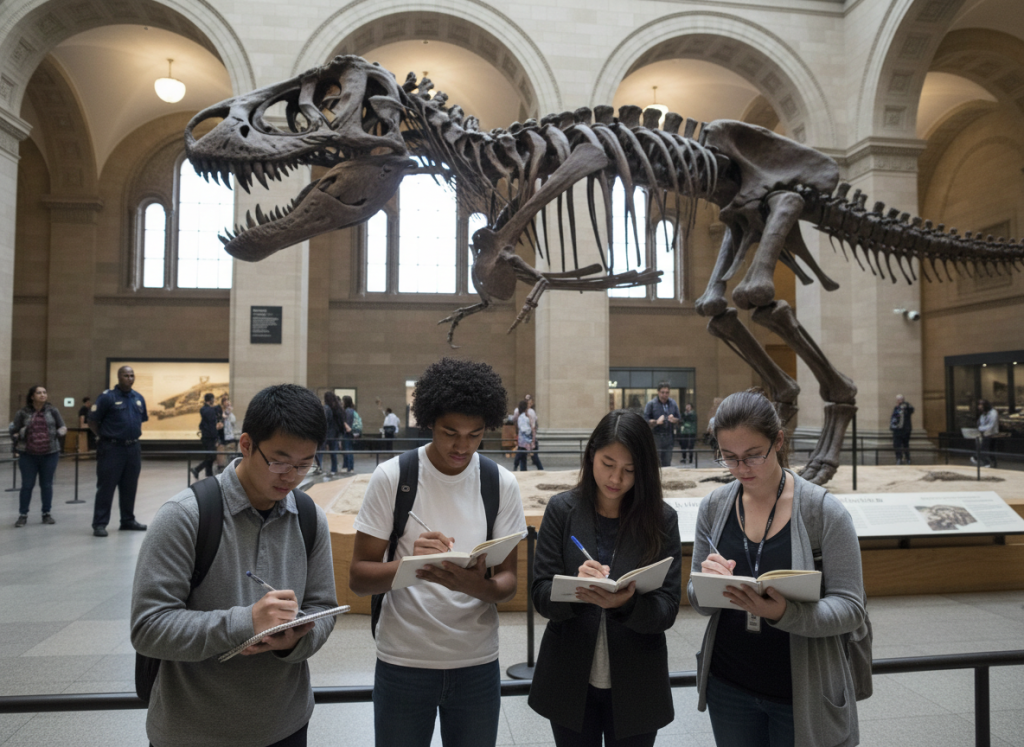
The American Museum of Natural History captivates teens with dinosaur fossils, the planetarium, and vast exhibits spanning natural sciences. Security throughout the museum ensures safe exploration. Teens can spend hours here while parents know they’re in a controlled environment.
The Metropolitan Museum of Art (The Met) ranks among the world’s greatest museums. While enormous, the Met maintains excellent security and helpful staff throughout. Teens interested in art, history, or culture find endless fascinating exhibits. The rooftop garden offers seasonal access with spectacular views.
The 9/11 Memorial & Museum provides powerful, age-appropriate education about September 11th. The outdoor memorial is free and constantly monitored. The museum inside offers moving exhibits that resonate with teens while maintaining respectful, secure access to this significant site.
Vibrant Neighborhoods Safe for Walking
Greenwich Village offers charming streets perfect for walking tours. The neighborhood’s residential character creates safety through locals who watch their community. Washington Square Park serves as the village heart with constant activity and NYPD presence.
Chelsea and the High Line create an elevated park experience along Manhattan’s west side. The High Line is a former railroad converted into a public park with art installations, gardens, and Hudson River views. Being elevated and linear with multiple exit points provides excellent safety. Chelsea’s streets below offer food options and interesting shops.
DUMBO (Down Under the Manhattan Bridge Overpass) in Brooklyn provides outstanding Manhattan skyline views. This waterfront neighborhood has become a family-friendly destination with ice cream shops, parks, and the famous spot where you can photograph the Empire State Building framed between buildings. Ferry service connects DUMBO to Manhattan safely.
Times Square and Broadway
Times Square might seem chaotic, but it’s actually one of New York’s safest areas due to constant police presence and security cameras. The pedestrian plazas allow safe people-watching. Street performers and massive digital screens create the quintessential New York energy teens seek.
Broadway shows offer secure, seated entertainment with standard theater security. Age-appropriate shows like Hamilton, Wicked, or The Lion King appeal to teens while providing completely controlled environments from entrance to exit.
Food Experiences in Safe Settings
Chelsea Market combines food halls, shops, and history in a secure indoor space. Teens can try different foods, shop, and experience local culture without worrying about street navigation. The building’s enclosed nature provides inherent safety.
Pizza tours through safe neighborhoods let teens experience New York’s most famous food. Quality programs arrange visits to legendary spots like Joe’s Pizza in Greenwich Village or Prince Street Pizza in Nolita—all located in well-traveled, safe areas with constant foot traffic.
Food courts at Rockefeller Center or Grand Central Terminal offer diverse options in secure, monitored spaces. Teens get choice and independence while parents know they’re in controlled environments with security throughout.
These destinations represent exactly where supervised programs spend time—places that maximize teen engagement while maintaining safety through smart location selection, controlled environments, and areas with natural security advantages.
The difference between safe and risky teen exploration often comes down to structure. Understanding this distinction helps parents make informed decisions about how their teens experience New York City.
The Risks of Unstructured Teen Groups
Teens exploring without adult supervision face predictable challenges. Even responsible teenagers lack the experience to handle unexpected situations effectively. Getting lost becomes a real possibility when unfamiliar with subway systems or street layouts.
Decision-making under pressure creates problems. When teens encounter aggressive panhandlers, miss subway connections, or face peer pressure to visit questionable areas, they’re making judgment calls without adult backup. One poor decision can cascade into serious issues.
No accountability exists in purely independent exploration. If someone gets separated, no one knows immediately. If plans change, parents remain unaware until check-in time. Communication gaps create windows where problems develop unchecked.

Financial management challenges arise frequently. Teens may overspend early in trips, struggle with tipping norms, or make poor food choices. While not dangerous, these issues create stress and detract from experiences.
Emergency response capabilities remain limited. If someone gets hurt or seriously lost, teens often don’t know the best response. They may hesitate to contact authorities or parents due to worry about getting in trouble. This delay can worsen situations.
How Structured Programs Create Safety Nets
Organized programs layer multiple safety measures that independent exploration lacks. Professional supervision means experienced adults who know the city guide every activity. These guides understand which routes work best, which areas to avoid, and how to handle unexpected situations.
Pre-planned itineraries eliminate dangerous improvisation. Every destination gets vetted in advance for safety and appropriateness. Transportation gets arranged through reliable methods. Timing allows proper pacing without rushing or excessive downtime that leads to poor choices.
Group cohesion protocols keep everyone together. Regular head counts ensure no one disappears unnoticed. Buddy systems create peer accountability. Meeting points get established before any free time. These simple procedures prevent the most common problems.
Communication systems maintain constant contact. Program leaders carry phones with emergency contacts programmed. Parent communication happens on set schedules. Staff can reach local authorities immediately if needed. Multi-layer communication means no one is ever truly alone.
Staff training prepares leaders for diverse scenarios. Quality programs train staff in first aid, conflict resolution, urban navigation, and teen development. This expertise allows quick, appropriate responses when issues arise.
The Independence Within Structure Model
The best programs don’t eliminate teen independence—they create safe frameworks for practicing it. Supervised free time in designated safe areas lets teens make choices while maintaining safety nets.
Small-group exploration with check-ins builds skills progressively. Teens might explore a museum section independently for an hour before regrouping. They choose lunch from options within a food court. These controlled choices develop decision-making without risk.
Structured programs teach transferable urban skills. Teens learn subway navigation by doing it with guides first. They practice ordering food, asking directions, and reading maps with support available. These skills serve them long after the program ends.
The confidence built through supervised success exceeds what unstructured experience provides. Teens who successfully navigate New York with appropriate support feel empowered. Those who struggle independently often feel overwhelmed and anxious about future city experiences.
What Parents Gain from Structured Programs
Peace of mind tops the parent benefit list. Knowing professionals monitor your teen continuously eliminates the constant worry that comes with independent exploration. You can work or relax instead of watching your phone anxiously.
Communication and updates keep parents informed. Quality programs provide daily summaries, photo sharing, and accessible staff for questions. This transparency builds trust and allows parents to enjoy knowing their teen is safe and having great experiences.
Insurance and emergency protocols exist in organized programs that individual families can’t replicate. Programs carry liability insurance, maintain relationships with local medical facilities, and have established emergency procedures tested over years of operation.
Educational value increases significantly with expert guides. Teens learn history, culture, and urban awareness from people who know New York deeply. This enrichment exceeds what families typically provide on their own.
Social benefits emerge from structured group experiences. Teens make friends with peers from diverse backgrounds. They develop social skills and confidence in new situations. These relationship-building opportunities happen naturally in well-run programs.
The choice between structured and unstructured exploration isn’t about limiting teens. It’s about providing the right level of support that matches their developmental needs and the environmental challenges of exploring a major city safely.
How Camp New York Ensures Teen Safety During City Exploration
Camp New York has perfected the model of safe teen exploration through years of experience and continuous refinement. Our approach addresses every parent concern while delivering authentic New York City experiences teens genuinely love.
Comprehensive Staff Training and Expertise
Every Camp New York staff member completes rigorous training before working with teens. Background checks screen all personnel thoroughly. Certifications in first aid and CPR come standard for every team member who supervises participants.
Our guides know New York intimately. Most have lived here for years and understand neighborhood dynamics, transportation nuances, and the best routes for teen groups. This local expertise prevents problems through smart planning rather than reactive problem-solving.
Staff training covers teen development and group dynamics specifically. Our team understands how to engage teenagers appropriately, recognize concerning behaviors, and maintain authority while building rapport. This specialized knowledge makes the difference between adequate supervision and truly effective guidance.

Emergency response protocols get practiced regularly. Staff members run through scenarios including medical emergencies, severe weather, transportation failures, and lost participants. This preparation ensures calm, effective responses if real situations arise.
Structured Daily Itineraries with Safety Built In
Every Camp New York day follows carefully planned schedules. We don’t improvise teen safety. Each activity gets selected for its combination of engagement value and security features. Travel routes avoid problematic areas while showcasing the best of New York.
Transportation arrangements prioritize safety above convenience. We use chartered buses for longer distances, walk in safe neighborhoods, and take subways only during appropriate times on well-traveled lines. Every transportation choice considers teen safety first.
Group sizes remain deliberately small. Our ratios ensure no teen disappears into a crowd unnoticed. Maximum group sizes allow staff to know every participant personally and monitor everyone continuously. We never sacrifice supervision quality for program capacity.
Time management prevents the rushed chaos that creates safety issues. Our schedules include buffer time for unexpected delays. Teens never feel pressure to hurry through crowded subway platforms or rush across busy intersections. Proper pacing supports safe navigation.
Multi-Layer Communication Systems
Parent communication happens daily through multiple channels. Our online portal shares photos and updates in real time. Daily email summaries outline activities and highlights. Parents can contact staff directly with questions or concerns anytime.
Teen check-in procedures occur throughout each day. We use buddy systems where participants look out for each other. Roll calls happen before and after every activity. Electronic check-in apps confirm everyone’s location during any independent time within safe zones.
Emergency contact information gets verified before programs begin. We maintain multiple contact numbers for every family. Medical information and special considerations get documented and shared with relevant staff members who might need to act quickly.
Two-way communication devices keep all staff connected. Program directors maintain contact with every group leader continuously. This network allows instant communication about any concern, whether minor schedule changes or serious situations requiring coordinated response.
Safe Exploration Zones and Boundaries
Camp New York designates specific areas for different levels of independence. In museums or controlled spaces, teens might explore in small groups. On streets, we maintain closer supervision. Every environment gets appropriate oversight matching its risk profile.
Boundaries are clearly explained and consistently enforced. Teens understand exactly where they can go independently and where staff accompaniment is required. These rules aren’t arbitrary—we explain the safety reasoning, which increases compliance and understanding.
Meeting points get established with precision. We don’t say “meet at the park.” We specify “meet at the Bethesda Fountain, south side, at 2:30 PM.” This clarity prevents confusion and ensures no one gets lost looking for vague locations.
Health, Medical, and Dietary Accommodations
Medical staff with professional credentials accompany every program. Our team can handle minor injuries, administer prescribed medications, and make sound judgments about when situations require emergency care. This expertise provides immediate response capabilities families can’t replicate independently.
Dietary restrictions and allergies get accommodated carefully. We plan meals at restaurants familiar with common restrictions. Staff members check ingredients and cross-contamination risks. Food experiences enhance trips rather than creating anxiety about safety.
Mental health awareness is part of our approach. Staff recognize signs of homesickness, anxiety, or social struggles. Our team intervenes supportively to ensure every teen feels comfortable and included. This attention to emotional safety matches our physical safety focus.
Continuous Program Evaluation and Improvement
Camp New York collects feedback from every participant and family. We analyze what works and what needs refinement. Safety procedures get updated based on experience and best practices from youth development experts.
Incident reports from minor situations help prevent major problems. We document and review everything that doesn’t go perfectly. This culture of continuous improvement means our safety protocols grow stronger every season.
Industry partnerships keep us current on youth safety standards. We maintain relationships with safety organizations, youth development associations, and other quality programs. These connections ensure our approaches reflect current best practices.
The result is a program where parents feel confident and teens feel trusted. We provide exactly the structured supervision that makes New York exploration safe while preserving the excitement and independence that makes it meaningful.
Ordering food in unfamiliar restaurants builds communication skills and social comfort. Teens practice speaking clearly, making eye contact, asking questions, and handling transactions independently. These everyday interactions strengthen confidence in all social situations.
Interacting with diverse people broadens perspectives and reduces social anxiety. New York exposes teens to every type of person imaginable. Learning that most people are helpful and kind, regardless of differences, reduces fear of unfamiliar social situations.
Making new friends in program groups develops relationship-building skills. Teens learn to introduce themselves, find common interests, and navigate group dynamics. These social abilities prove valuable throughout their academic and professional lives.
Problem-Solving and Resilience
Minor challenges in safe contexts build resilience. When the group takes a wrong train and needs to reroute, teens see adults handle problems calmly. They learn that mistakes happen and can be fixed. This normalizes imperfection and reduces anxiety about making errors.
Decision-making opportunities within boundaries develop judgment. Choosing what to order, which exhibit to visit first, or how to spend free time gives teens practice making age-appropriate decisions. Success builds confidence; mistakes become learning opportunities rather than crises.
Adapting to unexpected situations teaches flexibility. When rain changes outdoor plans or a museum exhibit is closed, teens observe and participate in creating alternative options. This adaptability serves them academically and personally for years to come.
Cultural Awareness and Appreciation
Exposure to world-class art, history, and culture expands horizons dramatically. Teens who experience the Metropolitan Museum or 9/11 Memorial gain perspective impossible to achieve through screens or books. These experiences often spark lifelong interests and passions.
Understanding urban diversity firsthand builds empathy and reduces prejudice. Seeing how millions of different people coexist peacefully in New York challenges stereotypes and broadens worldviews. This cultural competence becomes increasingly valuable in our connected global society.
Appreciating different lifestyles and choices helps teens define their own values. Exposure to various careers, living situations, and cultural practices helps them understand the range of valid life choices. This awareness supports identity development during crucial teen years.
Independence Within Appropriate Boundaries
Supervised programs offer the perfect balance for teen development. Complete independence feels overwhelming and risky. Excessive restriction prevents skill-building. Structured programs provide the middle ground where teens stretch capabilities safely.
Progressive responsibility matches developmental readiness. Early program days involve closer supervision. As teens demonstrate good judgment and urban awareness, programs can offer more independence within safe parameters. This gradual approach builds confidence sustainably.
Success experiences compound over time. Each day teens navigate successfully adds to their self-assurance. By program’s end, participants who arrived nervous about the subway are confidently planning routes and helping peers. This transformation happens through structured support.
Skills Parents Notice Long After Programs End
Parents consistently report increased maturity following quality New York programs. Teens show improved decision-making, better communication, and greater independence in daily life. The growth extends far beyond the specific context of city navigation.
Confidence in new situations generalizes broadly. Teens who successfully handled New York approach other new experiences with less anxiety. College transitions, job interviews, and travel to unfamiliar places feel more manageable after proving they can handle urban complexity.
Appreciation for parental concerns develops through experiencing responsibility. Teens understand why parents set boundaries when they’ve managed groups of peers. This perspective often improves family dynamics and communication about safety issues.
The personal growth teens achieve through safe New York exploration represents the program’s most valuable outcome. Confidence, independence, and life skills developed here serve young people throughout their lives, making the investment in quality programs worthwhile beyond the immediate experience.
Practical Planning Tips for Parents Considering NYC Teen Experiences
Whether you’re planning a family visit or considering a structured program, practical preparation enhances safety and enjoyment. These tips help parents make informed decisions and set teens up for success.
Choosing the Right Time and Season
Summer offers the best weather and longest daylight hours for exploration. June through August brings warm temperatures and reduced school crowds at museums. Summer also aligns with city-based summer camp for teens in New York scheduling.
Fall provides comfortable temperatures and beautiful foliage in Central Park. September and October avoid both summer heat and winter cold. Cultural institutions begin new exhibition seasons, offering fresh experiences.
Spring break can work well for shorter trips. March and April bring moderate weather and blossoming trees throughout the city. Hotels and programs may offer better availability compared to peak summer.
Winter requires more weather consideration but offers unique experiences. Holiday decorations, ice skating at Rockefeller Center, and fewer tourists create special memories. Indoor activities dominate itineraries, which suits New York’s exceptional museums perfectly.
Budgeting for Safe Experiences
Program costs typically include supervision, accommodations, meals, and activities. When comparing independent travel to structured programs, factor in the value of professional oversight and pre-arranged logistics that eliminate planning stress.
Transportation expenses add up quickly. Subway and bus rides cost money, though weekly or multi-day passes offer savings. Consider whether your teen can manage public transit independently or needs arranged transportation.
Food costs vary dramatically by choice. Pizza slices and food court meals cost less than sit-down restaurants. Programs usually provide meal allowances or planned dining that balances cost and safety.

Attraction tickets require advance research. Many museums offer suggested donations rather than fixed prices. Observation decks and Broadway shows cost more but provide memorable experiences. City Explorer passes bundle attractions with savings.
Emergency funds matter for any trip. Teens should have access to extra money for unexpected needs. Programs typically maintain emergency funds, but families traveling independently need larger buffers.
What Teens Should Pack for Safe NYC Exploration
Comfortable walking shoes rank as the single most important item. Teens will walk miles daily on city streets and in museums. Break in shoes before trips to prevent blisters that ruin experiences.
Layered clothing adapts to changing conditions. Air-conditioned museums feel cold after hot streets. Lightweight jackets work for summer evenings. The ability to add or remove layers maintains comfort throughout varied environments.
Small backpacks or crossbody bags carry essentials safely. Bags should close securely and wear across the body to prevent theft. Size should accommodate a water bottle, phone, sunscreen, and small purchases without being cumbersome.
Portable phone chargers prevent dead batteries at critical moments. Teens rely on phones for photos, communication, and navigation. Backup power eliminates the vulnerability of losing connection when batteries die.
Weather-appropriate accessories include sunglasses, hats, and light rain jackets. Summer sun in Times Square or Central Park requires sun protection. Sudden rain showers happen frequently, making light rain gear valuable.
Preparing Teens Mentally for City Exploration
Discuss safety expectations clearly before trips. Review rules about staying with groups, checking in, and handling unexpected situations. Ensure teens understand the reasoning behind rules rather than simply enforcing arbitrary restrictions.
Practice subway navigation virtually if possible. Google Maps street view and YouTube videos of NYC subway rides help teens visualize what to expect. Reducing unknowns decreases anxiety and increases confidence.
Set realistic expectations about pace and fatigue. City exploration involves lots of walking and stimulation. Teens should understand that tiredness is normal and doesn’t mean they’re not having fun.
Identify specific interests to prioritize. If your teen loves art, history, food, or theater, plan experiences around those interests. Personal investment increases engagement and makes the whole experience more meaningful.
Questions to Ask When Evaluating Programs
Staff ratios and qualifications matter tremendously. Ask about adult-to-teen ratios, staff training, background checks, and certifications. Quality programs openly share this information and pride themselves on rigorous standards.
Safety protocols deserve detailed inquiry. How do programs handle emergencies? What’s the communication plan with parents? How are medical needs managed? Comprehensive answers indicate serious attention to participant safety.
Itinerary details reveal program quality. Vague descriptions suggest inadequate planning. Specific activities, timing, and transportation arrangements indicate thoughtful organization that prioritizes both experience quality and safety.
References from past families provide valuable insights. Reputable programs gladly connect prospective families with alumni who can share honest experiences. Speaking with parents whose teens participated offers realistic expectations.
Accreditation and insurance demonstrate professionalism. Programs affiliated with recognized youth organizations and carrying comprehensive liability insurance show commitment to standards and preparedness for any situation.
Taking time for thorough planning and evaluation ensures your teen’s New York experience balances safety with the independence and excitement that makes city exploration truly transformative.
Frequently Asked Questions About Safe Teen NYC Exploration
Is New York City actually safe for teenagers to explore?
Yes, New York City is safe for teenagers with appropriate preparation and supervision. NYC ranks among America’s safest large cities with crime rates below the national average for major metropolitan areas. The key factors are proper guidance, staying in well-traveled areas, using common sense precautions, and having adult oversight when needed.
Tourist areas where teens typically spend time receive enhanced security attention. The NYPD maintains constant presence in places like Times Square, Central Park, and major museums. Millions of teenagers visit New York safely every year by following basic safety protocols and having appropriate structure to their exploration.
What age is appropriate for teens to explore New York with supervision?
Most structured programs accept teens ages 13-17, though some programs work with middle schoolers as young as 12. The appropriate age depends more on maturity level than specific age. Teens who can follow instructions, stay with groups, and communicate effectively typically do well in supervised NYC programs.
Younger teens (12-14) benefit from closer supervision with higher staff ratios. Older teens (15-17) can handle more independence within safe parameters. Camp New York tailors supervision levels to participant ages and demonstrated responsibility, ensuring every teen gets appropriate oversight for their developmental stage.
How does Camp New York keep teens safe while exploring the city?
Camp New York employs multiple layers of safety protocols. All staff complete background checks and maintain first aid/CPR certifications. We maintain small group sizes with favorable staff-to-teen ratios ensuring continuous supervision. Daily itineraries are pre-planned for safe routes and appropriate activities.
Our communication systems include regular parent updates, teen check-ins throughout the day, and staff connectivity via two-way devices. We use only vetted transportation methods and stay in well-traveled, safe neighborhoods. Medical staff accompany all programs to handle any health needs immediately. Emergency protocols are practiced regularly so staff can respond effectively to any situation.
Can teens explore New York independently with some supervision?
Yes, the best programs provide structured independence within safe boundaries. This model allows teens to make choices and practice decision-making while maintaining safety nets. For example, teens might explore a museum section independently for an hour before regrouping, or choose from lunch options within a supervised food court.
This balanced approach builds confidence and life skills more effectively than either complete restriction or total independence. Teens gain real autonomy experience while adults maintain oversight that prevents serious problems. The level of independence increases as teens demonstrate good judgment and urban awareness throughout the program.
What should teens know before exploring New York City?
Teens should understand basic urban safety: stay aware of surroundings, keep valuables secure, use phones discreetly, and stay in well-traveled areas. They should know how to read subway maps, ask for directions appropriately, and what to do if separated from their group.
Communication protocols matter—teens need to understand check-in expectations and who to contact in different situations. They should recognize common tourist scams and know that it’s okay to say “no thank you” and keep walking. Most importantly, teens should feel empowered to trust their instincts and seek help from staff, police, or store employees if anything feels wrong.
How do I choose between a family visit and a structured teen program?
Both options offer value depending on your goals. Family visits allow shared experiences and flexibility in scheduling. They work well for younger teens who prefer staying with family or when the whole family wants to explore together.
Structured programs like Camp New York provide peer socialization, skill-building through managed independence, and relief from constant parental supervision. Programs offer expert guides who know the city intimately and create experiences specifically designed for teen interests. Many families find that a quality program gives teens more authentic engagement with the city than family trips where parents naturally maintain closer control.
What’s the best way to keep in touch with my teen during NYC programs?
Quality programs maintain multiple communication channels. Camp New York provides daily email updates with photos and activity summaries. Our online portal shares real-time updates throughout the day. Parents receive direct staff contact information for questions or concerns.
Teens typically check in with parents during scheduled free time. We encourage brief daily calls or texts so parents hear directly from participants. However, we also recommend trusting the program’s communication systems rather than requiring constant contact, which can interfere with teens fully engaging in experiences and building independence.
Are New York subways safe for teens to use?
Yes, the NYC subway system is safe when used appropriately. Over five million people ride daily without incident. The subway has transit police, security cameras, and help points throughout. The key is using common sense: ride during daylight hours when possible, stay in center cars near conductors during off-peak times, keep belongings close, and remain aware of surroundings.
Teens in structured programs learn subway navigation with expert guidance before using it more independently. This progressive approach teaches safe practices while building confidence. Most programs avoid rush hour crowds and late-night travel, sticking to times when subways are busy but manageable.
What if my teen has dietary restrictions or medical needs?
Reputable programs accommodate dietary restrictions and medical needs as standard practice. Camp New York collects detailed health information before programs begin. We plan meals at restaurants familiar with common restrictions and allergies. Staff members verify ingredients and monitor cross-contamination risks.
Medical staff with professional credentials accompany all programs to administer medications, handle minor injuries, and make appropriate decisions about when situations require emergency care. We maintain detailed emergency contact information and medical histories. Parents should communicate all concerns during registration so programs can plan appropriate accommodations.
How much does it cost for teens to safely explore New York?
Costs vary significantly based on approach. Independent family trips involve hotel costs (0-400+ per night), meals (-60 per person daily), attraction tickets (-45 each), and transportation. A week for a family of four easily exceeds ,000-5,000.
Structured programs like Camp New York typically range from ,000-4,000 per teen for week-long programs including accommodations, meals, activities, supervision, and transportation. While seemingly expensive, this pricing bundles everything with professional oversight that independent trips can’t replicate. Many families find structured programs offer better value when considering the expertise, safety infrastructure, and stress reduction they provide.
What Parents Say About Safe NYC Teen Exploration
Hearing from parents who’ve navigated these decisions helps contextualize the experience. While every family’s situation differs, common themes emerge from parents whose teens have explored New York safely.
The Transformation Parents Notice
Parents consistently report increased confidence following quality New York programs. Teens return with new independence in daily tasks, improved decision-making, and greater willingness to try new experiences. The growth extends far beyond just urban navigation skills.
Communication often improves after programs. Teens who successfully managed challenges independently develop appreciation for parental guidance. Many families report easier conversations about safety and boundaries after teens have experienced appropriate responsibility.
Social development surprises many parents. Teens make lasting friendships with peers from diverse backgrounds. Parents notice increased social confidence, better conversation skills, and expanded perspectives on different lifestyles and cultures.
Academic motivation sometimes increases unexpectedly. Exposure to world-class museums, universities, and cultural institutions inspires educational ambitions. Many teens discover new interests that influence academic and career paths.
Common Initial Concerns That Resolved
Nearly every parent initially worries about subway safety. After programs, most realize the subway is safer and easier than anticipated when teens learn proper navigation skills and safety protocols with expert guidance.
Separation anxiety affects parents more than teens in many cases. Parents worry constantly during first days, then realize their anxiety decreases as daily updates demonstrate everything is fine. Trusting the process becomes easier with each positive communication.
Cost concerns get reevaluated based on outcomes. While programs require investment, parents consistently report the value exceeds the cost when considering safety, convenience, expertise, and the personal growth teens experience.
Communication expectations shift appropriately. Parents learn that constant contact actually interferes with teen engagement and independence-building. Scheduled check-ins provide sufficient reassurance while allowing teens to fully immerse in experiences.
“I was terrified sending my 14-year-old to New York with Camp New York. The daily updates were so reassuring, and when she came home confident, independent, and more mature, I realized this was exactly what she needed. The structured environment let her explore safely while building real-world skills.”
“Our family visited New York together, then our son did Camp New York the following summer. The difference was remarkable. With us, he stayed close and cautious. In the program with peers and expert guides, he engaged completely and developed urban confidence we couldn’t teach him ourselves.”

These perspectives from real families highlight that while concerns about teen safety in New York are natural, they’re manageable with proper structure and professional programs designed specifically to address them.
Year-Round Opportunities for Safe Teen NYC Exploration
While summer programs dominate teen New York experiences, opportunities exist throughout the year. Understanding options helps families choose timing that works best for their schedules and teen’s needs.
Summer Intensive Programs
Traditional summer camps like Camp New York offer the most comprehensive experiences. Week-long or multi-week programs provide deep immersion in city life with time to develop skills progressively and form meaningful friendships with other participants.
Summer timing means best weather and longest daylight hours. Outdoor activities in Central Park, walking tours through neighborhoods, and outdoor dining all work better in warm months. The energy of summer in New York creates memorable experiences.
Longer programs allow for varied experiences across multiple weeks. Teens can explore different neighborhoods, visit various museums, attend Broadway shows, and still have time for free exploration within safe parameters. This variety maintains engagement throughout extended programs.
Spring and Fall Break Options
Shorter programs during school breaks work for families preferring week-long experiences. March, April, October, and November offer comfortable weather and less crowded attractions than peak summer months.
Break timing aligns with school schedules without requiring extended absence. For teens with academic commitments or sports seasons, break programs provide city experiences without conflicting with school obligations.
Holiday-specific programming adds unique elements. Spring break might include cherry blossoms in Central Park. Fall programs showcase autumn foliage and harvest festivals. These seasonal touches create distinctive experiences.
School Trip Partnerships
Many quality programs work with schools to create customized educational trips. These experiences combine curriculum requirements with safe exploration, giving teachers confidence about educational value while providing appropriate supervision.
School trip models typically involve shorter durations (3-5 days) with higher educational content. Museums, historical sites, and cultural institutions get framed around learning objectives that support classroom studies.
Chaperone support reduces teacher burden. Professional program staff handle logistics, navigation, and detailed safety monitoring while teachers focus on educational engagement and student supervision within their expertise.
Family Program Add-Ons
Some programs offer family participation options where parents can be nearby but teens participate in dedicated teen programming. This model provides security for families wanting proximity while giving teens peer experiences and appropriate independence.
Parallel programming lets families explore together during some times while teens have dedicated activities with peers at others. This balance works well for families with multiple children of different ages or parents wanting their own NYC experiences.
Virtual Preparation Programs
Pre-trip virtual sessions help teens prepare for safe exploration before arriving in New York. Online orientation covers subway navigation, safety protocols, and cultural awareness, reducing anxiety and increasing readiness for in-person experiences.
Post-program follow-up maintains connections and celebrates growth. Some programs offer reunion events or continued communication that helps teens maintain friendships and reflect on their New York experiences.
The variety of timing and format options means families can find approaches that match their schedules, budgets, and comfort levels while still providing the structured, safe exploration that benefits teens most.
Your Teen’s Safe New York Adventure Starts Here
A safe way for teens to explore New York absolutely exists. It requires the right combination of preparation, knowledge, appropriate supervision, and structured experiences designed specifically for teenage development and safety needs.
Throughout this guide, you’ve discovered that New York City offers tremendous opportunities for teen growth when approached correctly. The safety concerns parents naturally feel are legitimate but manageable through smart planning and professional programs that prioritize participant wellbeing.
The essential safety tips shared here—from subway navigation to communication protocols to choosing safe destinations—provide foundations for successful exploration whether you’re planning a family visit or considering a structured program. These practices work because they’re proven through millions of safe teen experiences in New York City each year.

The difference between risky and rewarding exploration comes down to structure. While independent teen travel presents unnecessary risks, overly restrictive approaches prevent the confidence-building and skill development that make city experiences valuable. Quality programs like Camp New York strike the perfect balance—providing professional oversight that ensures safety while creating space for the independence teens need to grow.
The personal transformation teens experience through safe New York exploration extends far beyond the immediate trip. Urban navigation skills, social confidence, cultural awareness, problem-solving abilities, and general life competence developed here serve young people throughout their academic careers and adult lives.
For parents, the peace of mind that comes from knowing your teen is safe allows you to appreciate rather than stress about their growing independence. Daily updates, professional supervision, comprehensive safety protocols, and clear communication eliminate the constant worry that accompanies less structured approaches.
Camp New York specializes in providing exactly this combination of safety and enrichment. Our years of experience, rigorous staff training, comprehensive safety protocols, and deep knowledge of New York City create the ideal environment for teens to explore confidently while parents feel secure.
We understand the concerns keeping you up at night because hundreds of families have shared them with us before enrolling their teens. Those same families consistently report that Camp New York exceeded expectations and provided their teenagers with transformative experiences in a completely safe environment.
The question isn’t whether New York can be safe for teens—it absolutely can be with proper structure. The question is whether you’re ready to give your teen this opportunity for growth, independence, and unforgettable experiences in one of the world’s greatest cities.
Give Your Teen the Safe New York Experience They’ll Treasure Forever
Camp New York provides the perfect balance of professional supervision, authentic city exploration, and independence-building experiences. Limited spots available for Summer 2024—secure your teen’s place in our next program.
Your teen’s safe New York adventure awaits. The memories, skills, and confidence they’ll gain will last a lifetime. Take the next step toward giving them this incredible opportunity with the security and structure that lets both of you feel confident about the experience.
Still have questions? Speak directly with our program director:
Available Monday-Friday, 9 AM – 6 PM EST