
First Day at Summer Camp USA: What to Expect
New place. New faces. Your summer starts here.
Your first day at summer camp USA starts with finding your feet as a member of staff. Depending on your camp’s arrangements, that may mean checking in, meeting your team, finding your accommodation and learning what happens next. You do not need to arrive knowing every name, building or routine.
This guide follows a counsellor’s arrival, rather than a camper’s first day. It will help you prepare useful questions, organise your essentials and approach those first introductions with more confidence.
Before leaving, keep your arrival instructions handy and use our summer camp packing guide to check your bags. Once you arrive, focus on one step at a time: check in, get settled and find out where you need to be next.
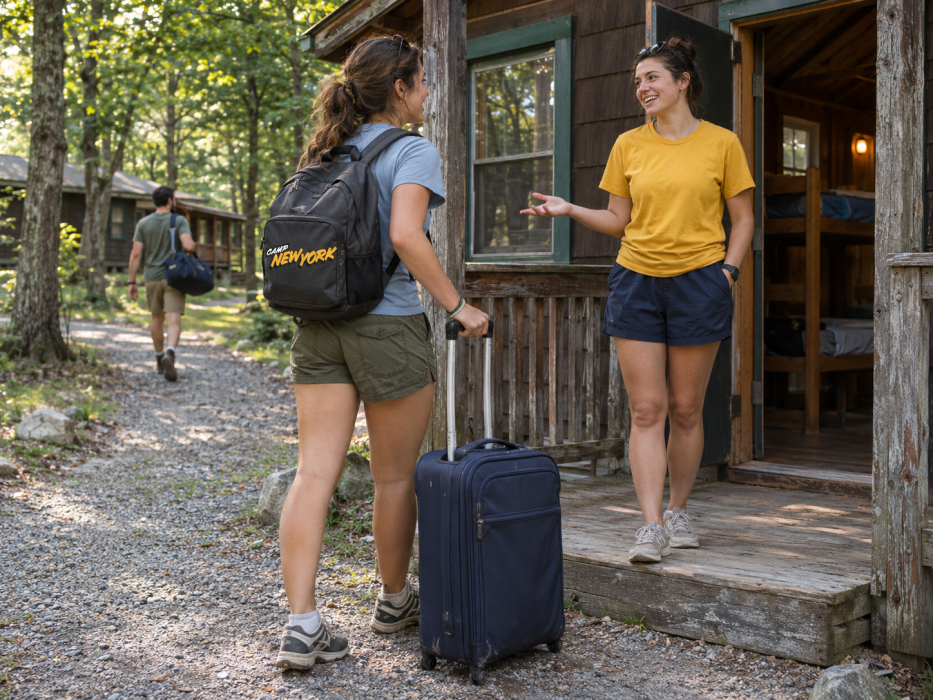
Start with a hello, find your check-in point and give yourself time to settle into your surroundings.
Arriving at Camp and Checking In
Before travelling, confirm your arrival date, meeting point and the person to contact if your plans change. Your first task at camp is to let the right staff member know you have arrived. Follow your placement’s instructions rather than assuming every camp has the same reception or check-in routine.
Find Your Check-In Point
Go to the office, welcome area or meeting point named in your arrival information. Introduce yourself with your name and role, and explain that you are arriving for staff check-in. If you are unsure where to go, contact your named arrival contact before wandering around the site.
Keep Requested Details Ready
Have your placement information and any documents requested in your arrival instructions accessible. Ask which administrative tasks need completing now and which will happen during orientation. Keep personal paperwork secure rather than leaving it in a shared space with your luggage.
Confirm What Happens Next
Find out where to put your bags, where you will be staying and when you next need to meet the team. Ask about your next meal, drinking water and bathroom facilities. Write down the time and location of your first briefing so you can settle in without guessing the schedule.
If Your Journey Is Delayed
Use the arrival contact or emergency number provided with your travel instructions. Share your name, updated arrival estimate and any effect on an arranged pickup. Do not assume a driver or camp staff member can see your flight updates. For questions before departure, contact Camp New York to clarify your arrangements.
Meeting Your Team and Settling Into Your Cabin
Once you have checked in, focus on learning who you will work with and where you will live. Your accommodation may be a camper cabin, a staff cabin or another shared space, depending on your role and the camp’s arrangements. Confirm your assigned space before unpacking.
Start With Simple Introductions
Share your name, where you have travelled from and the role you are joining. Ask teammates what they will be doing and whether they have worked at camp before. You do not need a memorable introduction: a friendly hello and a few genuine questions are enough to begin a conversation.
Find Your Immediate Supervisor
Learn who you report to and how to reach them. Depending on the camp, this might be a cabin leader, activity lead or another designated staff member. Ask who handles accommodation questions and who can help when your usual supervisor is unavailable.
Unpack the Essentials First
Confirm your bed and storage area, then get out what you need for the next few hours: a change of clothes, toiletries, water bottle and any materials requested for your first meeting. Keep bags clear of walkways and leave shared surfaces available for others.
Agree on Shared-Space Habits
Ask about lights, alarms, cleaning, charging devices and storing personal belongings. Follow camp policies and discuss everyday preferences respectfully with the people sharing your space. Small conversations early on can prevent misunderstandings later.
Useful Questions for Your First Cabin Conversation
- Which bed and storage space have I been assigned?
- Where are the bathrooms and laundry facilities?
- What are the quiet hours and cleaning arrangements?
- Where should valuables and personal documents be kept?
- How do we receive schedule updates?
- Where and when is our next team meeting?
Give yourself time to learn names. Ask again when you forget, and make a private note of key staff names and roles if it helps. Returning staff may already know one another; you can join conversations gradually without feeling you must meet everyone at once.
Staff Orientation and Training
Orientation introduces you to how your camp works and what it expects from staff. Your first day may include an opening briefing, with further sessions spread across the training period. Keep the schedule handy, bring something for notes and ask how to catch up if travel disruption affects your arrival.
Get to Know the Site
Use the camp tour to locate your accommodation, dining area, activity spaces, staff meeting points and health centre. Ask which areas are restricted and how staff receive urgent announcements. Knowing where to go matters more than memorising every building name immediately.
Understand Camper Care Expectations
Pay close attention to training on supervision, professional boundaries, behaviour support and reporting concerns. Learn who to contact and the procedures your camp expects you to follow. If an example or instruction is unclear, ask the trainer to explain it before you take responsibility for campers.
Learn Your Emergency Procedures
Find out how to raise an alarm, summon help and follow the camp’s instructions during an emergency. Take part in scheduled drills and clarify your assigned responsibilities. Follow the procedures taught at your camp rather than relying on assumptions from another workplace or a previous summer.
Prepare for Your Specific Role
General introductions do not replace training for your assigned duties. Ask your supervisor about equipment, activity rules and any assessments or sign-offs needed before you lead a session. Different camp counsellor roles involve different responsibilities, so be clear about what you are authorised and prepared to do.
Leave Each Session With a Clear Next Step
Note where you need to be next, what you should bring and any questions that still need answering. If you are asked to do something you have not been trained for or do not understand, tell your supervisor before proceeding. Asking early helps you learn the camp’s approach and work confidently within your role.
Understanding Your Role and Daily Routine
Your arrival-day schedule may look very different from a normal day once campers are on site. Ask your supervisor to explain both: what you need to do during staff preparation, and how your responsibilities will work when the programme begins. Use your assigned duties and the camp timetable as your starting point.
Clarify Your Main Responsibilities
Find out which campers, activities or areas you will support and who you will work alongside. Ask how cabin responsibilities fit with activity sessions, meals and evening duties. The overview of camp counsellor roles can help you prepare questions, but your supervisor should confirm your actual assignment.
Learn How the Timetable Works
Check where schedules are posted and how changes are communicated. Note meeting times, preparation periods and where you should report at the start of your duties. Ask how staff organise transitions between activities, including who is responsible for supervising campers as groups move around camp.
Confirm Breaks and Handovers
Ask how breaks, time off and cover are arranged for your role. Before leaving an assigned duty, follow the camp’s handover procedure and confirm who is taking responsibility. If a session runs late or your relief has not arrived, contact your supervisor rather than assuming someone else has noticed.
Questions for Your First Supervisor Meeting
Write down the answers you will need tomorrow. You can build your understanding of the wider routine as training progresses.
- Where do I report, and what time should I be there?
- Which duties am I responsible for at this stage?
- Who should I ask when instructions or schedules change?
- What preparation or equipment do I need for my next session?
- How are breaks, cover and handovers confirmed?
Handling First-Day Nerves
You can be excited about camp and still feel uncertain when you arrive. A long journey, unfamiliar surroundings and lots of introductions can make the first day feel busy. Give yourself a few manageable priorities rather than expecting to feel completely settled straight away.
Focus on the Next Small Step
Start with something concrete: find your room, fill your water bottle or check the next meeting time. Write down information you might forget. You do not need to understand the entire summer on arrival; concentrate on what will help you take part in the next activity or briefing.
Join One Conversation
Introduce yourself to a roommate, sit with someone at a meal or ask a teammate about their role. You do not have to be the loudest person in the group to connect with others. Returning staff may already have friendships, but that does not mean there is no room for you.
Make Room for Travel Tiredness
Keep your first evening simple where the schedule allows. Eat, get your essentials organised and find out when you need to be ready the next morning. If a travel problem or tiredness is affecting your ability to follow instructions, let your supervisor know rather than quietly missing a commitment.
Stay Connected Without Missing Camp
When you have an appropriate break, send a short message home to say you have arrived. Agree a realistic time for a longer catch-up, taking the time difference and staff schedule into account. Put your phone away during introductions and training so you can get to know the people around you.
Speak Up When You Need Support
If you are struggling to settle in, ask your supervisor or the designated staff support contact for a private conversation. Explain what is difficult and what you need help understanding. You can also contact Camp New York for programme-related questions. Use the emergency contact provided in your instructions for urgent out-of-hours matters.
Your First-Day Checklist
Use this as a quick reminder alongside your camp’s own arrival schedule. The order may change depending on when you arrive and what staff have arranged. Prioritise scheduled briefings, then fit your personal settling-in tasks around them.
Check In and Get Your Bearings
- Let your designated arrival contact know you are on site.
- Confirm your accommodation and where to leave your bags.
- Find the bathrooms, drinking water and next meal location.
- Check the time and place of your first staff meeting.
Meet People and Ask Questions
- Introduce yourself to your roommates and immediate team.
- Learn your supervisor’s name and how to contact them.
- Unpack essentials and store personal documents securely.
- Note any forms, equipment or preparation requested by staff.
Set Yourself Up for Tomorrow
- Confirm tomorrow’s first meeting time and location.
- Prepare suitable clothing and anything you need to bring.
- Set your alarm using the local time.
- Send a brief arrival update home when you have a break.
One Useful Question Before You Finish
Ask your supervisor, “Is there anything else I need to complete before tomorrow?” This gives you a chance to catch a missed instruction or clarify a task. Keep any unanswered questions together in your notes so you can raise them at the next appropriate briefing.
FAQs
A few practical answers to help you prepare for your first day as a camp counsellor. Your camp’s confirmed arrival instructions and staff schedule should guide your plans.
What happens on your first day at summer camp as a counsellor?
Depending on your arrival time and camp arrangements, you may check in, find your accommodation, meet staff and attend an introductory briefing. Ask where you need to be next and what to bring. Your first day may be part of staff preparation rather than a day with campers.
Do counsellors arrive before the campers?
Your camp may arrange staff arrival before campers arrive so there is time for orientation, training and preparation. The dates depend on your placement and role. Use your confirmed staff arrival date when planning travel, rather than the camp’s advertised opening day for campers.
What should I wear when I arrive at camp?
Follow any clothing instructions supplied by your camp. Comfortable clothes, practical footwear and an accessible layer can help you manage the journey and move around the site. Keep a change of clothes easy to reach, and check whether your first meeting requires particular clothing or equipment.
Will I share accommodation with other staff?
Accommodation depends on your camp and assigned duties. You could be placed in a camper cabin, a staff cabin or another shared space. Confirm your bed and storage area before unpacking, and ask about bathrooms, cleaning arrangements, quiet hours and secure storage for personal belongings.
What if I do not know anyone when I arrive?
Begin with the people sharing your accommodation or attending your first briefing. Introduce yourself, ask about their roles and join a conversation at a meal. You do not need to meet the whole team immediately. If you are unsure how to get involved, ask your supervisor to introduce you to your immediate teammates.
Do I need to know how to do everything on day one?
Arrive ready to listen, participate and explain your existing experience honestly. Orientation introduces the camp’s procedures, while role-specific training addresses your assigned duties. Ask before attempting unfamiliar tasks, and tell your supervisor if you need further instruction or have not completed the preparation required for an activity.
What should I do if my flight or transfer is delayed?
Contact the person or number listed in your arrival instructions as soon as you can. Share your name, revised arrival estimate and any impact on a planned pickup. Keep those details available offline and do not assume camp staff or a driver will automatically receive updates about your journey.
Who should I speak to if I am struggling to settle in?
Ask your supervisor or designated staff support contact for a private conversation. Explain what you are finding difficult and what would help, whether that is clearer instructions, an introduction or support with your accommodation. For programme questions, you can also contact Camp New York .
Still preparing your bags? Use our summer camp packing guide alongside the list supplied by your camp.

Benefits of
Camp New York
Location Control
You can choose your camp placement within New York State or nearby areas, ensuring you are close enough to the excitement of New York City.
Variety of Activities
Camp New York participants have the chance to teach or coach various activities they are passionate about, such as soccer, basketball, swimming, dance, photography and so much more. Take a look at our roles at a Summer Camp page for a more dedicated breakdown. You don’t have to be an expert, but a keen attitude to learn and make a difference is a must.
Cultural Experience
Being in proximity to NYC allows for a rich cultural experience during your time off, visit museums, attend Broadway shows, or enjoy New York city’s renowned food scene… especially pizza!
Hear from our happy campers
Camp New York reviews from our counsellors who raved about the experience. Staff love the support, friends and memories made.
Massive thank you to Camp New York. Appreciate all you’ve done for me! If you want to choose a camp in America go with Camp New York.
Lee, Lyndon and all the team got me the best place and it truly changed my life.
Sounds corny, but trust me it’s boss.

Jack Critchlow
I’m going through Camp New York as a returner and they have been amazing so far! They talk you through every step and support you with any questions you may have. I know how helpful this would be to first years as camp is such an amazing but nerve wracking experience.
Highly recommend Camp New York!

Aleisha Smith
Great provider, highly recommend going through these guys for US summer camp placements.
Incredibly attentive and really helpful at every stage, from interview through to the placement fair.
Definitely recommend attending one of the in-person fairs. Overall top service

Ellis Nevitt