
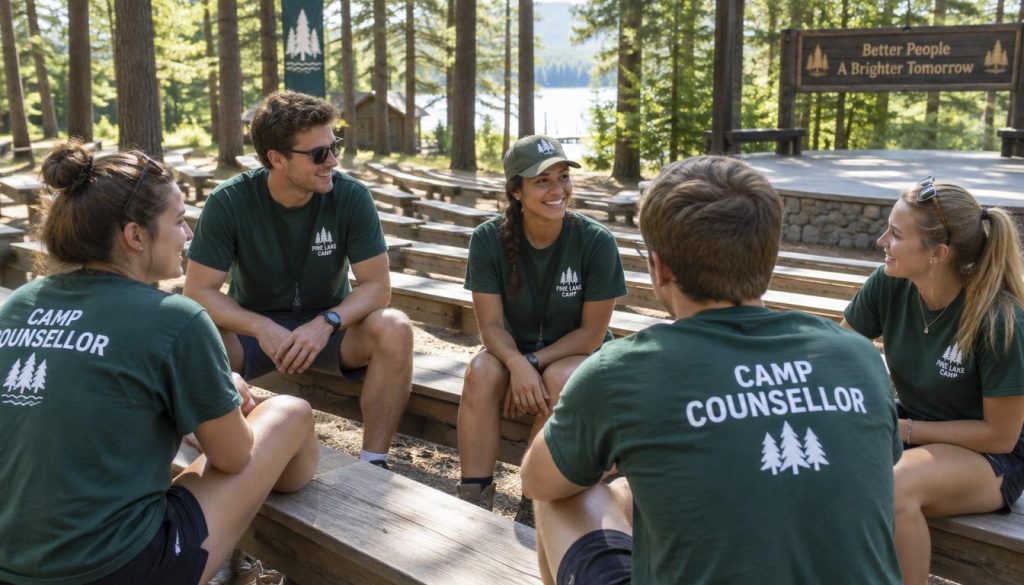
Evaluating common parent questions about summer camp jobs helps families understand the balance between exciting international experience and professional responsibility. Preparing for an American camp role involves navigating background vetting, structured work duties, communal living and independent financial planning. Clear communication between parents and adult applicants establishes realistic expectations before any contracts are signed.
Every placement depends on the individual camp setting, the specific counselling role and the regulations set by designated visa sponsors. Because each young adult enters the programme as an independent employee rather than a paying participant, understanding the administrative boundaries and support structures helps families navigate the journey constructively.
What does working at an American summer camp actually involve?
Working at a summer camp in America is full-time seasonal employment centred on the care, mentorship and safety of children. Applicants are hired as staff members rather than enrolled as holiday guests, meaning daily schedules follow strict operational routines determined by the camp administration.
Counsellors guide campers through scheduled sports, arts and outdoor pursuits while managing pastoral needs within shared living quarters. Off-duty hours, rest days and curfew rules vary significantly across independent, non-profit, agency and specialist camps.
- Participates in scheduled outdoor and creative activities for recreation.
- Receives continuous pastoral care, supervision and instruction from camp staff.
- Pays tuition fees to attend a structured summer holiday programme.
Camper Experience
- Delivers activity instruction and maintains child protection standards.
- Maintains round-the-clock behavioural supervision and pastoral leadership.
- Earns a seasonal pocket salary under an agreed employment contract.
Staff Employment
Recognising these differences helps families appreciate that summer camp jobs for young adults carry genuine workplace expectations, requiring physical stamina and emotional maturity throughout the season.
Is my son or daughter eligible to apply?
Eligibility criteria reflect both the employing camp’s operational requirements and official US exchange visitor regulations. Candidates must meet baseline age thresholds, demonstrate conversational English fluency and verify their availability for the full duration of the camp season.
Placements also require robust character vetting, including comprehensive criminal background checks and professional references. While parents can offer practical encouragement, the candidate must complete the application independently and account for their own skills and experience honestly.
Camp directors assess an applicant’s direct communication during interviews, making personal ownership of the application essential for securing a confirmed role.
Specific instructional roles, such as waterfront lifeguarding, equestrian coaching or ropes course management, demand accredited coaching credentials. Applicants must confirm whether their certifications meet US industry standards before accepting an offer.
How are camps and placements selected?
The placement process matches an applicant’s skills, personality and availability with the staffing requirements of accredited US summer camps. Camp New York coordinates recruitment and candidate screening, presenting verified profiles to camp directors who make final hiring decisions.
Because facilities range from rustic wilderness environments to modern sports academies, candidates should evaluate every interview offer carefully. Families can help prospective staff formulate constructive questions to understand the precise working environment before committing.
Role Expectations
Clarify daily activity duties, camper age groups, direct line managers and expected instructional hours.
Camp Environment
Investigate the geographic location, cabin living facilities, staff transport access and regional climate conditions.
Training Standards
Ask about pre-camp orientation schedules, technical skill clinics and local emergency protocols.
No agency can guarantee a specific camp location, peer group or activity schedule in advance. Final contracts reflect the operational priorities of the individual employer.
What should we know about safety and safeguarding?
Camp counsellor safety and child protection are fundamental to the operational standards of accredited summer camps. Staff undergo mandatory pre-season orientation covering child protection legislation, positive behaviour management and emergency evacuation plans.
Safeguarding camper welfare requires staff to follow strict protocols regarding physical boundaries, supervision ratios and reporting procedures. Staff welfare systems operate in parallel, providing designated pastoral supervisors or health centre personnel to support employee wellbeing.
Staff members must operate strictly within their trained competence and follow camp incident reporting procedures immediately if safety concerns arise.
Parents should encourage applicants to review how concerns are escalated on site. Understanding the formal chain of command reduces anxiety and helps young adults resolve workplace challenges through proper internal channels.
Where will they live, and what will daily life be like?
Summer camp accommodation for staff varies according to the camp’s physical architecture and supervisory philosophy. General counsellors typically reside in shared wooden cabins with campers, maintaining overnight pastoral oversight alongside fellow staff members.
Activity specialists or support staff may sleep in separate staff bunkhouses or shared platform tents. Facilities include communal washrooms, scheduled laundry routines and communal dining halls that supply standard daily meals.

Staff accommodation reflects traditional camp architecture, offering functional communal spaces in outdoor settings.
Personal connectivity differs widely from urban domestic standards. Wi-Fi availability and mobile telephone reception are often restricted to designated staff lounges to minimise distractions during camper contact hours.
How much does it cost, and will they be paid?
Financial transparency allows families to establish a dependable seasonal budget before committing to summer camp jobs USA. Gross pocket salaries are intended to offset travel and living costs rather than function as corporate salaries, with net funds determined by individual spending choices.
Upfront programme costs include agency vetting, medical screening, police disclosures and consular processing. Employing camps typically cover food and lodging during the contracted employment period, while personal weekend travel remains the participant’s responsibility.
| Cost or benefit | What to check | Where to confirm it |
| Programme fee | Staged payments | Review the Camp New York published schedule. |
| Pocket salary | Fixed allowances | Check the formal placement agreement. |
| Return flights | Booking conditions | Confirm travel arrangements with the placement team. |
| J-1 visa fee | Embassy charges | Verify current US Department of State guidance. |
| Health cover | Policy exclusions | Read the designated sponsor policy documents. |
| Staff lodging | Housing terms | Ask the camp director during placement discussions. |
| Daily meals | Dietary options | Confirm dining hall provision before departure. |
| Personal money | Incidental funds | Agree an independent spending budget before travel. |
Families should calculate potential deductions, regional taxes and personal transport costs before travel to prevent unrealistic expectations regarding summer camp job costs.
What happens if they become ill or need additional support?
Residential camps operate on-site health centres staffed by registered nurses or visiting physicians who manage routine illnesses and minor injuries. Significant trauma or severe acute conditions are referred to regional hospitals under agreed local healthcare networks.
Support for international camp staff includes mandatory medical cover arranged through the designated visa sponsor. This cover applies to acute, unexpected illnesses or injuries sustained during the programme period rather than routine check-ups.
Pre-existing medical conditions, ongoing dental care and prescription medications must be declared fully during medical screening to avoid insurance claim disputes.
Candidates requiring physical accommodations or dietary adjustments must discuss their requirements candidly before accepting a contract. Not every rustic camp facility can accommodate complex medical or accessibility needs.
What if they feel homesick or struggle to settle in?
Adjusting to a first summer working abroad involves navigating intense interpersonal contact, foreign workplace culture and occasional fatigue. Early feelings of isolation or homesickness are standard reactions to communal living and heavy daily responsibility.
Agreeing a balanced communication schedule prevents young adults from disengaging from camp life during off-duty hours. Constant messaging can inadvertently prolong culture shock by keeping the staff member mentally tethered to home routines.
- Agree weekly contact windows rather than expecting multiple daily telephone updates.
- Encourage the staff member to confide in designated head counsellors or peer mentors on site.
- Acknowledge that early adjustment difficulties are common across international work placements.
- Maintain a calm perspective when listening to venting after demanding shifts.
Camp environments demand emotional resilience and active problem-solving. While supportive leadership helps staff integrate, seasonal work cannot serve as therapeutic support for unmanaged mental health difficulties.
Can parents contact Camp New York on the applicant’s behalf?
Data protection regulations and legal adulthood define the boundaries of third-party communication. Because applicants are legally recognised adults, Camp New York communicates directly with the candidate regarding their application status, placement offers and interview feedback.
Camp New York parents are welcome to seek general advice regarding programme mechanics, timelines and safety frameworks. However, specific personal details cannot be disclosed to parents without the applicant’s explicit written consent.
Direct Candidate Contact
Interviews, contractual agreements, visa compliance updates and placement confirmations remain between the applicant and the placement team.
Emergency Protocols
Nominated next-of-kin contacts receive immediate communication through official sponsor and camp channels in the event of serious emergencies.
Establishing clear family expectations around this legal boundary prevents frustration and reinforces the young adult’s professional independence.
What about visas, flights and travel after camp?
International staff enter the United States under the J-1 exchange visitor programme, administered by designated US visa sponsors. Candidates must attend an in-person interview at a US embassy or consulate to secure their visa stamp before departure.
Visa issuance remains entirely at the discretion of consular officers, meaning approval cannot be treated as a foregone conclusion. Travel arrangements should account for visa appointment wait times and formal documentation processing.

International exchange visitors must adhere strictly to federal immigration requirements and sponsor travel guidelines.
Following successful contract completion, J-1 visa summer camp regulations may permit a domestic travel window. Post-camp travel depends on individual visa terms, sponsor authorisation and having valid health insurance throughout the extended stay.
What can they gain from the experience?
Working at camp accelerates professional capabilities by immersing staff in high-responsibility environments. Young adults build transferable capabilities in public speaking, conflict resolution, logistical planning and collaborative problem-solving.
The role also demands sustained physical energy, emotional restraint and patience when supporting diverse groups of children. Balancing these professional rewards against demanding operational realities gives families an objective perspective on the summer ahead.
Workplace Strengths Developed
- Practical leadership and crisis management skills under direct operational pressure.
- Cross-cultural adaptability gained from working alongside an international team.
- Demonstrated reliability and accountability highly valued by future employers.
Operational Demands Encountered
- Long daily working hours with limited private personal space.
- Continuous supervisory responsibility requiring sustained vigilance and patience.
- Modest financial remuneration relative to the high volume of daily duties.
These experiences foster genuine self-reliance, helping young adults transition into capable, independent professionals.
A parent’s checklist before departure
Organised administrative preparation reduces pre-departure stress for the entire family. Reviewing practical requirements collaboratively confirms that all legal, medical and financial details are settled before international flights depart.
This parents’ guide to summer camp jobs highlights essential milestones to confirm prior to departure, supporting a structured transition into seasonal work abroad.
- Confirm receipt of the written camp contract, role description and arrival instructions.
- Verify passport validity, J-1 exchange visa paperwork and the official DS-2019 certificate.
- Review medical insurance coverage dates, policy limitations and emergency claims procedures.
- Assemble essential physical health paperwork, immunization histories and prescribed medications.
- Organise dual banking options, international cards and sufficient initial contingency funds.
- Record official 24-hour emergency contact numbers for the designated sponsor and camp director.
- Agree a predictable family communication plan that respects camp operational schedules.
Completing these steps systematically provides reassurance while leaving operational management firmly in the hands of the travelling professional.
Frequently asked questions
Do applicants need to be enrolled university students?
Eligibility depends on the specific exchange visitor visa category and camp role. While some specialist exchange positions prioritize current students, many general counsellor roles welcome qualified young adults who are not currently enrolled in higher education.
Can parents receive direct updates regarding an application?
Camp New York corresponds directly with the adult applicant to maintain data privacy compliance and encourage personal professional ownership. Parents may seek general programme advice, but individual account updates require the candidate’s explicit consent.
How does summer camp accommodation for staff work in practice?
Accommodation depends on the camp’s physical layout and role assignments. Most counsellors share rustic wooden cabins with children and co-counsellors, while some activity specialists reside in communal adult bunkhouses with shared bathroom facilities.
What occurs if a staff member falls ill during the summer?
Camps provide access to on-site medical clinics staffed by registered healthcare professionals for routine care. Unexpected severe illnesses or injuries are treated at local medical facilities and covered through the participant’s mandatory exchange visitor health insurance.
Are staff members permitted to travel after camp ends?
Participants completing their full employment contract may travel domestically within official US immigration allowances. Travel permission depends on sponsor sign-off, adherence to federal visa regulations and maintaining active travel health insurance.
Still have questions about summer camp jobs?
Considering a summer camp job in the USA? Explore Camp New York’s programme information together, then contact the team with your questions about eligibility, placements and preparation. When your son or daughter is ready, encourage them to take the next step in their application.