
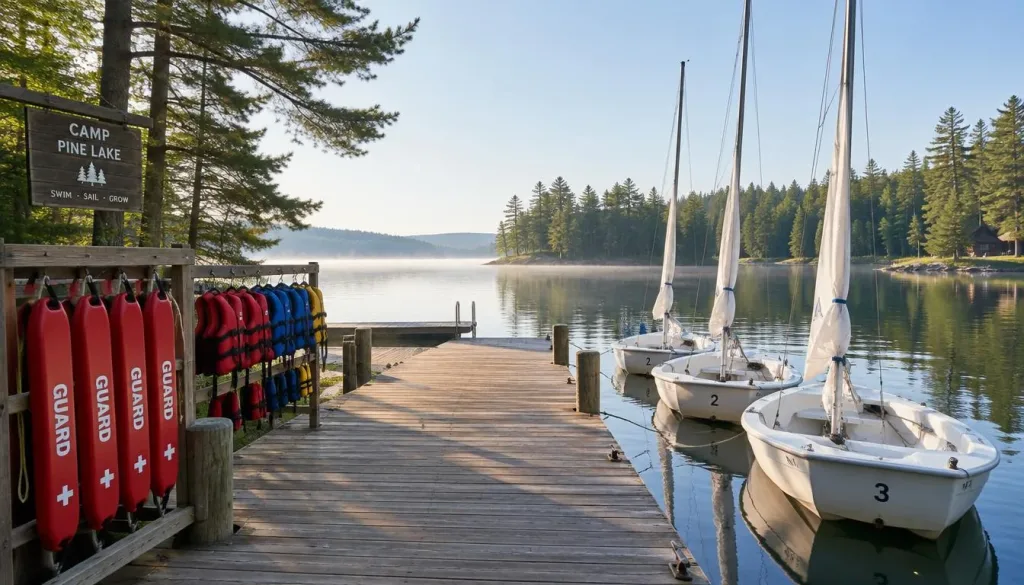
World Water Day takes place on 22 March each year as an official United Nations observance focusing attention on freshwater and the sustainable management of freshwater resources. Camp New York offers summer camp lifeguard jobs, sailing roles and broader waterfront opportunities across American summer camps. These positions combine activity-specific technical competence with the daily responsibility of supporting young people in natural environments.
Successful candidates approach aquatic activities with respect for natural waterways, consistent attention to safety standards and clear communication. Understanding how camps operate helps you evaluate your background, prepare accurate qualification details and find an appropriate role for the season ahead.
What is World Water Day?
World Water Day is a formal United Nations observance designated to highlight the critical importance of freshwater. First formally proposed at the 1992 United Nations Conference on Environment and Development in Rio de Janeiro, the observance takes place annually on 22 March. It serves as an international platform to advocate for sustainable freshwater management and to address systemic challenges surrounding sanitation and reliable access to safe drinking water.
The observance focuses attention on freshwater conservation and equitable access worldwide, supporting initiatives coordinated through the official United Nations World Water Day platform.
Rather than functioning as a commercial awareness day or a public holiday, the date provides a global framework for assessing water resilience. It draws attention to communities experiencing water scarcity and underscores the necessity of protecting delicate aquatic ecosystems. Waterfront staff at summer camp benefit from understanding these principles when supervising recreation on natural lakes and rivers.
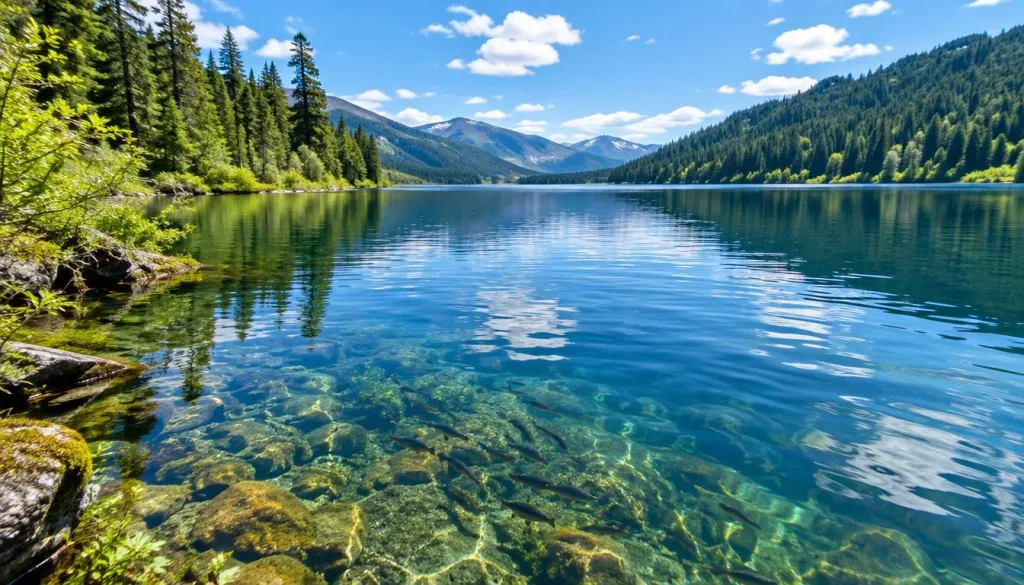
Freshwater conservation remains at the core of the international observance.
What does World Water Day have to do with summer camp?
Summer camps in the United States operate largely around lakes, rivers and outdoor pools. While 22 March falls outside the standard summer camp operational window, the values underpinning the observance apply directly to waterfront stewardship across the warmer months. Managing swimming and boating areas requires constant mindfulness about water usage, shoreline erosion and aquatic habitat preservation.
Water conservation and waterfront safety represent distinct responsibilities within camp operations, though both depend on respect for freshwater environments and careful adherence to operating procedures.
Participating in or supervising watersports does not resolve global water scarcity or replace professional humanitarian aid. However, waterfront staff serve as frontline guardians who help campers develop thoughtful habits around shared resources. Practising responsible water habits at camp encourages young people to appreciate the natural bodies of water they enjoy.
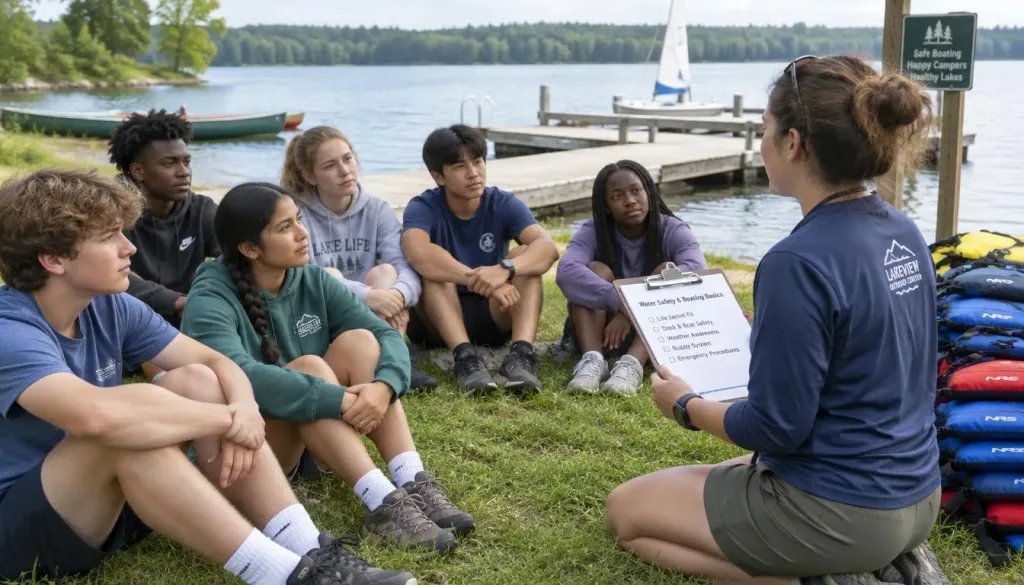
Respect for aquatic environments begins with structured waterfront briefings.
Lifeguard jobs with Camp New York
Camp New York lifeguard jobs place skilled swimmers at the heart of daily camp safety operations. Lifeguarding at camp is an active, demanding post requiring complete visual vigilance and disciplined boundary enforcement. It is never a passive role or one that can be combined with personal distractions while on duty.
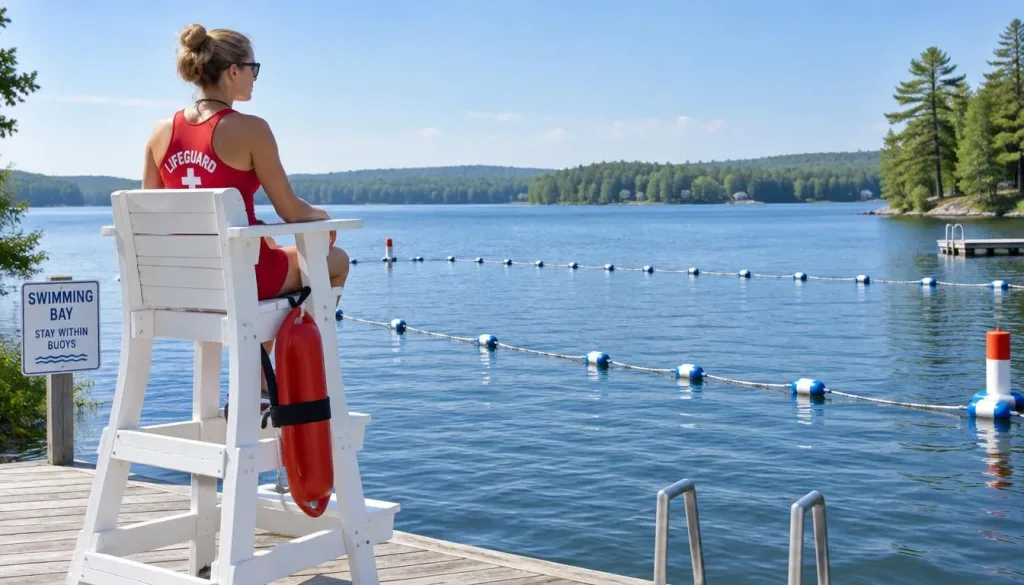
Active scanning and dedicated focus define daily lifeguarding responsibilities.
Lifeguard responsibilities vary between swimming pools and open-water lake facilities, with duties typically including:
- Maintaining unbroken visual surveillance across designated swimming zones during assigned shifts.
- Enforcing camp waterfront rules and buddy systems firmly and courteously among campers and staff.
- Conducting routine hazard sweeps, dock inspections and equipment readiness checks before sessions begin.
- Collaborating closely with fellow waterfront guards and camp medical personnel.
- Responding promptly within the specific scope of training and assigned facility emergency action plans.
Candidates must verify the exact qualification standards and physical screening assessments required by individual camps before accepting a placement.
Sailing roles at summer camp
Sailing jobs at summer camp offer an engaging pathway for individuals with solid boating experience to lead lake activities. Camp sailing programmes introduce young people to wind awareness, rigging and small-craft handling. Successful applicants combine practical helm skills with an ability to break technical concepts down for beginners.
Activity preparation
Staff inspect hulls, inspect running rigging, check personal flotation devices and verify prevailing weather forecasts prior to each session.
Session leadership
Leaders guide campers through basic tiller control, sail trim and capsize recovery protocols while maintaining an organised, calm boat bay.
Camps distinguish clearly between recreational sailing experience and formal instructional competence. Owning a vessel, sailing recreationally on weekends or holding an unrelated basic certificate does not automatically qualify an applicant to lead teaching sessions. Staff must follow camp-specific weather limitations, safety boat policies and approved instructional syllabuses.
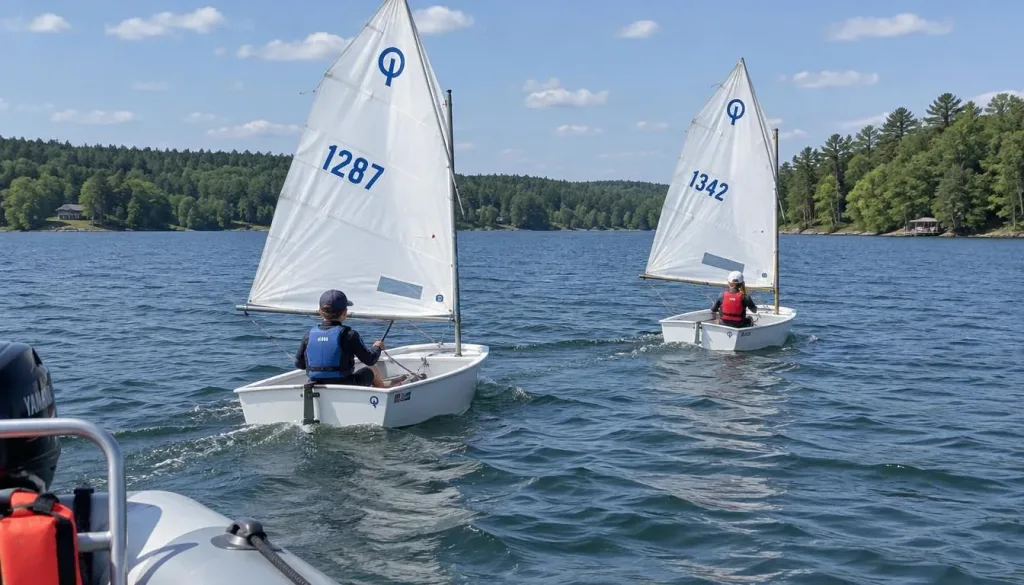
Small-craft instruction emphasises structured handling drills and lake awareness.
Other waterfront roles to ask about
Waterfront jobs USA extend across several popular aquatic disciplines beyond traditional pool lifeguarding and dinghy sailing. Depending on seasonal camp requirements and site facilities, camps frequently recruit specialists across other water disciplines. Applicants with verified backgrounds can enquire about positions that match their specific strengths.
Potential water sports summer camp jobs to explore include:
- Swimming instruction camp jobs focusing on stroke improvement, water confidence and beginner safety.
- Canoeing instruction covering tandem paddling, portage skills and flatwater navigation.
- Kayaking coaching featuring paddle control, tracking drills and wet-exit safety techniques.
- Stand-up paddleboarding leadership combining balance instruction with basic board maintenance.
- Specialist waterski or wakeboard boat driving where accredited licenses and safety clearances are held.
These disciplines represent areas to explore rather than uniform vacancies at every location. Each discipline maintains distinct prerequisite certifications, and holding a qualification in one activity does not confer clearance to teach another.
Which waterfront role could suit your experience?
Evaluating your qualifications against specific waterfront demands helps clarify where your background adds the greatest value. The comparison below outlines common activity areas, relevant competencies to highlight and essential points to verify prior to application.
| Role area | Relevant experience to highlight | Possible responsibilities | What to confirm before applying |
| Lifeguarding | Observation skills | Bathers surveillance | Check accepted certifications, required in-person screening drills, and seasonal site procedures before applying. |
| Sailing | Dinghy handling | Rigging instruction | Verify craft types, safety boat operating requirements, and teaching syllabus expectations with your placement team. |
| Swimming instruction | Stroke mechanics | Confidence building | Confirm age brackets, beginner lesson framework, and whether dual lifeguarding certification is mandatory for the post. |
| Paddlesports | Paddle technique | Equipment upkeep | Review craft inventories, open-water journey boundaries, and specific governing body endorsements recognised by the camp. |
Requirements vary significantly between independent camps, agency sponsors and municipal regulations. Review the specific guidance provided for your assigned facility rather than assuming universal rules apply.
What makes a strong waterfront applicant?
Technical credentials establish basic competence, but personal reliability determines day-to-day effectiveness at camp. Waterfront directors look for mature individuals who maintain focus across long summer days and manage groups of children with patience. Enthusiasm alone cannot replace formal competence, yet a supportive attitude remains vital.
Vigilance and care
Strong staff demonstrate high attention to detail, recognising emerging hazards and following operating protocols without taking shortcuts.
Clear communication
Staff must give instructions assertively, listen carefully to campers and project calm confidence during high-energy water activities.
Humility and teamwork
Effective leaders recognise their personal limits, follow designated supervisors and readily request assistance whenever conditions change.
A waterfront camp counsellor works closely with colleagues to maintain consistent supervision standards throughout the season. Demonstrating a willingness to receive feedback and support camp-wide routines distinguishes top applicants during recruitment screenings.
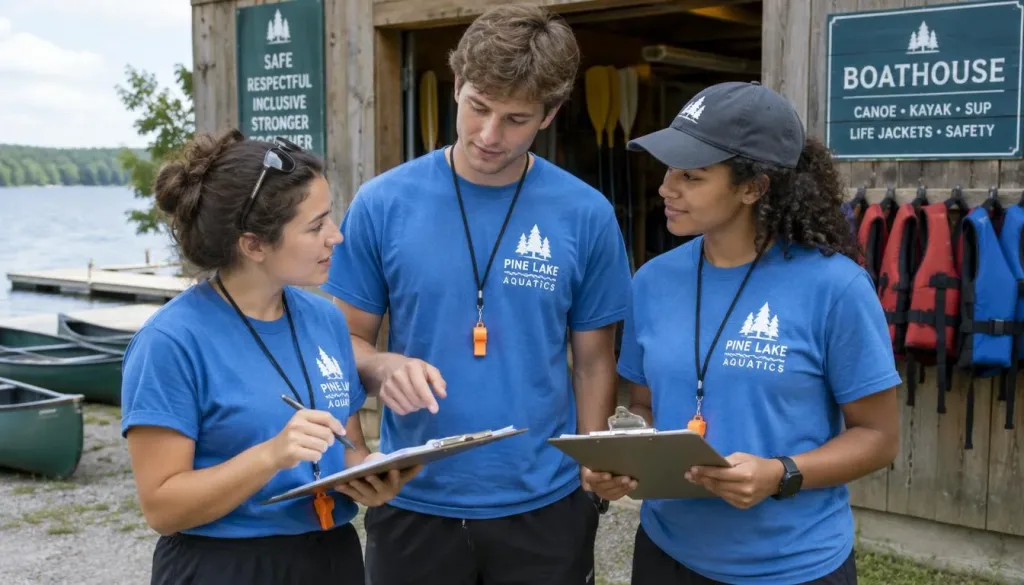
Teamwork and thorough daily briefings support consistent waterfront safety.
How to highlight your water-based experience
Presenting your aquatic background clearly allows recruitment coordinators to assess your readiness accurately. Vague statements such as being a strong swimmer provide insufficient evidence of instructional or supervisory capability. Detailed documentation of your practical hours and training history gives a clearer picture.
Always state the exact awarding body, title and expiry date for each credential. Never overstate competency levels or obscure an expired certificate during application reviews.
When compiling your profile, specify whether your lifeguarding experience occurred in commercial pools, open-water lakes or tidal coastal environments. Detail the size of groups you have coached, the age ranges supported and any experience working with nervous swimmers. Mentioning equipment maintenance skills, such as repairing sails or maintaining paddle fleets, also provides practical context.
World Water Day-inspired activities for camp
Camp programmes can adapt World Water Day activities into meaningful dry-land educational sessions during summer camp. These four structured activities engage campers with freshwater conservation, natural ecosystems and resource stewardship without requiring water consumption or lake entry.
All environmental sessions must take place on dry land, avoiding water-wasting games, unmonitored shorelines or drinking from unverified demonstration supplies.
1. A freshwater facts quiz
Materials needed include reusable question cards, clipboards and scrap paper. Leaders run a light-hearted, age-appropriate trivia challenge exploring global freshwater distribution, local lake wildlife and domestic water usage habits. For campers requiring learning adaptations, provide visual answer cards or pair participants with peer reading partners.
2. A “where do we use water?” mapping activity
Materials comprise large poster paper and coloured markers. Groups map out daily water touchpoints around camp, including dining hall dishwashing, bathhouse hygiene, hydration stations and landscape care, identifying realistic ways to prevent taps running needlessly. An inclusion adaptation invites participants to contribute via sketches, spoken observations or tactile camp map markers.
3. A waterway poster challenge
Materials include recycled card, pencils, paints and non-toxic markers. Campers design informational posters highlighting responsible lake conduct, such as packing out litter, respecting nesting waterfowl and keeping sun cream out of fragile shallows. Adapt the task by enabling collaborative mural creation so campers of differing fine-motor abilities participate equally.
4. A model watershed activity
Materials include a shallow plastic tray, crumpled newspaper, foil sheets, washable non-toxic powdered food colouring and a light misting spray bottle. Campers shape a small mock landscape to observe how simulated rain flows across hills toward a central basin, demonstrating how ground debris travels into lakes. Clarify that demonstration fluid is not potable, and offer tactile guidance for participants needing motor support.
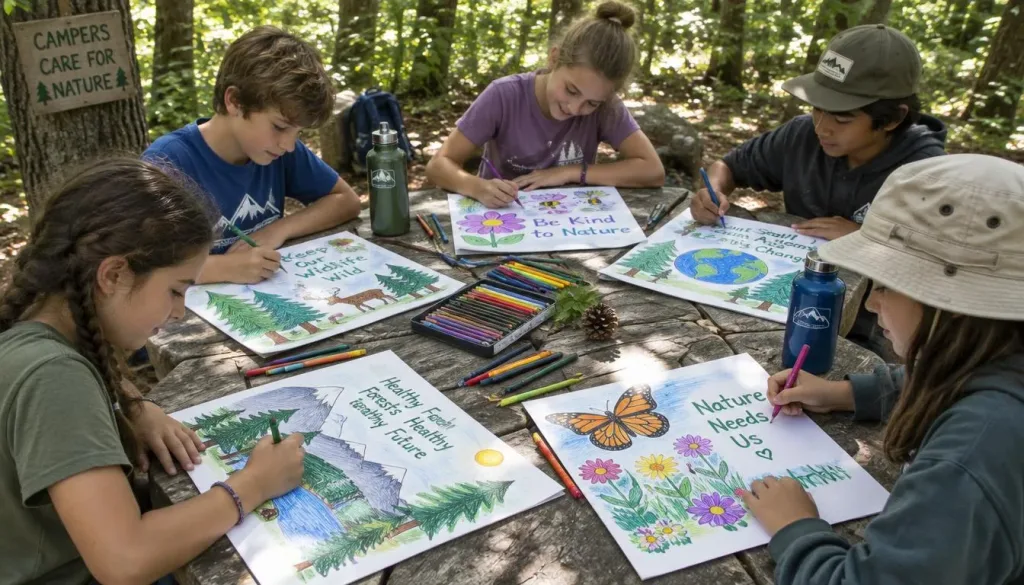
Creative dry-land projects encourage campers to reflect on shared natural resources.
Waterfront staff are part of the wider camp team
Specialist waterfront instructors contribute to the broader camp community alongside their scheduled aquatic sessions. A camp functions as an interconnected ecosystem where all staff members help foster an encouraging, welcoming atmosphere. Depending on your placement contract, your responsibilities may extend beyond the boathouse or pool deck.
Job structures vary across camps. Some specialists focus exclusively on waterfront coaching, while others carry dual responsibilities as cabin counsellors; always check your formal job description.
Waterfront leaders frequently assist with morning flag assemblies, supervise mealtimes and participate in whole-camp evening events. Demonstrating reliable role modelling, active safeguarding adherence and patience during non-swimming hours strengthens the entire camp community. Embracing these general duties helps you build rewarding connections with staff and campers across the summer.
How to explore waterfront jobs with Camp New York
Navigating the recruitment process for summer camp jobs in America requires structured preparation and early engagement. Following a clear pathway ensures your qualifications receive proper consideration for current vacancies across participating camps.
- Review general international applicant eligibility guidelines, age parameters and full summer availability windows.
- Identify which specific waterfront role matches your verified background, whether lifeguarding, sailing instruction or paddlesports.
- Compile clear documentation of all current qualifications, including certifying organisations, license numbers and valid expiry dates.
- Enquire directly with Camp New York to determine which foreign credentials satisfy US placement prerequisites or state camp standards.
- Clarify whether practical on-site screening, swim assessments or pre-camp bridging courses are mandated for your assigned role.
- Carefully read the detailed job outline, accommodation conditions, supervisory expectations and contract scope.
- Complete the official registration portal submission, providing references and accurate details of your practical coaching or guarding history.
Camp placements depend on seasonal camp availability, specific waterfront openings and successful document verification. Preparing your paperwork early helps placement teams match your background to suitable camps.
Frequently asked questions
When is World Water Day?
World Water Day takes place annually on 22 March. It is an international United Nations observance celebrating freshwater and advocating for the sustainable management of global freshwater resources.
Does Camp New York offer lifeguard jobs?
Camp New York offers lifeguard opportunities across summer camps in the United States. Specific vacancies, operational settings and placement locations depend on individual camp requirements and current seasonal availability.
Can I apply with sailing experience?
Applicants with practical sailing backgrounds can apply for camp boating roles. However, casual or recreational experience does not automatically qualify someone to instruct, so applicants must confirm role-specific prerequisites.
Do I need qualifications for a waterfront role?
Qualification criteria depend on the specific activity, camp policy and state licensing regulations. Applicants must check the certified credentials, assessments and instructional background needed for their chosen position.
Will my overseas lifeguard qualification be accepted?
Overseas lifeguard certificates are not automatically accepted by every US summer camp facility. Applicants must confirm whether their particular award is recognised or if conversion training and local testing are necessary.
Are there waterfront opportunities beyond lifeguarding and sailing?
Additional waterfront roles may include swimming instruction, kayaking, canoeing, stand-up paddleboarding and approved watersports. These positions depend on facility provisions and individual skill requirements.
Put your waterfront skills to work this summer
World Water Day is a reminder to value water and treat it responsibly. If you have lifeguarding, sailing or other relevant waterfront skills, explore opportunities with Camp New York. Check the current requirements, tell us about your experience and discover where you could contribute to a summer camp team.