
Camp Counsellor Interview Questions and Answers
Bring your experience. Find the words to show it.
Preparing for camp counsellor interview questions starts with understanding the job and finding honest examples of what you can contribute. Practise explaining why you want to work with children, how you support a team and what you would do when a situation needs help from a supervisor.
Camp New York’s application process includes an initial interview before your profile is made visible to camps. A camp interested in hiring you may then arrange its own interview to discuss your skills and a particular role. Check your invitation so you know which conversation you are preparing for.
This guide brings together practice questions, illustrative answers and realistic camper scenarios. Read about camp counsellor responsibilities first, then choose examples from your own work, volunteering, studies or activities. Prepare questions of your own to learn whether the role suits you.
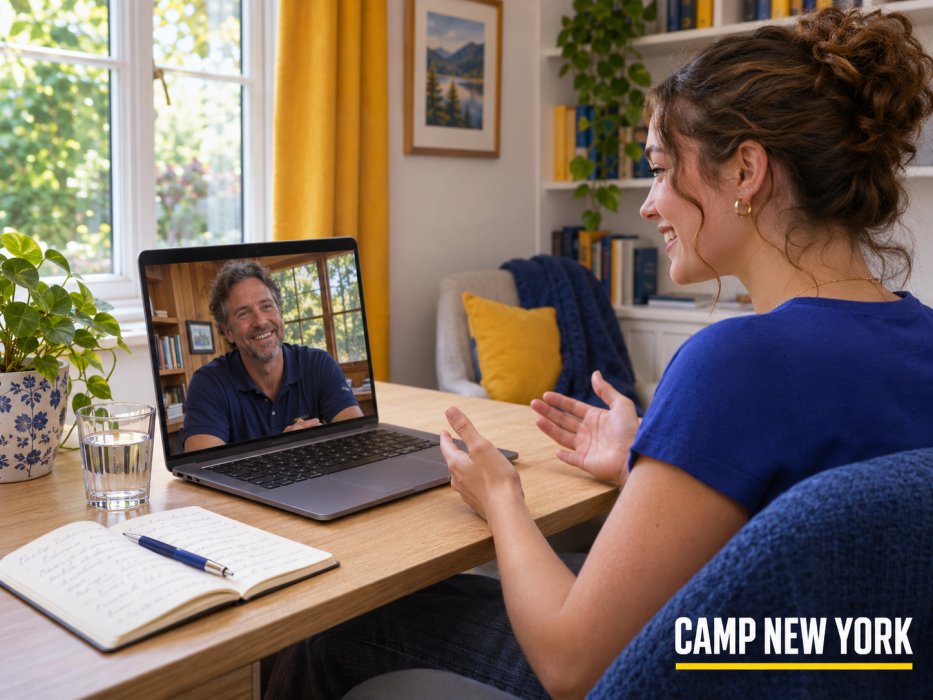
Common Camp Counsellor Interview Questions and Example Answers
Use these practice questions to explain your motivation, experience and understanding of camp work. Each answer below is an original illustration, not a statement about your background or a confirmed interview script. Borrow the structure, then replace the details with something you can discuss honestly.
Tell Me About Yourself
What to show: a brief introduction that connects your current interests and relevant experience to the role. Choose a few useful details rather than retelling your entire CV.
“I’m studying sports coaching and volunteer at a weekly junior club, where I help the lead coach organise equipment and explain activities. I enjoy helping beginners feel comfortable joining in. I’d like to bring that patience and enthusiasm to camp while learning from a more experienced team.”
Why it works: it identifies a relevant interest, explains the applicant’s actual level of responsibility and connects it to working with campers.
Make it yours: choose one current activity, one relevant experience and one contribution you could make.
Why Do You Want to Be a Camp Counsellor?
What to show: an interest in supporting children and contributing to camp life, alongside a realistic understanding of the work.
“I enjoy helping children try something they initially find difficult. At my local club, I’ve seen how encouragement and clear instructions help beginners take part. Camp appeals to me because I could contribute throughout the day, including the routines and preparation that make activities possible.”
Why it works: it connects motivation to campers’ experiences and recognises responsibilities beyond leading enjoyable activities.
Make it yours: explain what you enjoy about supporting others and give a genuine reason the camp role interests you.
Why Do You Want to Work at Our Camp?
What to show: that you have researched the particular camp and can connect something specific about it to your interests or experience.
“Your website describes a programme where campers can try creative activities as well as sports. I help with a community drama group, so that variety interests me. I’d like to understand how counsellors support first-time campers and whether this role includes helping with performance activities.”
Why it works: it uses a concrete detail from the camp’s programme, connects it to relevant experience and opens a useful conversation about the role.
Make it yours: check the camp’s own website first. Use a verified detail instead of assuming it offers the activities mentioned in this example.
What Strength Would You Bring to Our Team?
What to show: one useful strength supported by an example of what you actually did.
“I’m good at making instructions manageable. When I helped at a junior craft session, several children were unsure where to start. With the session leader’s agreement, I demonstrated one step at a time and checked their understanding. They began working more independently, and I learned to check understanding before moving on.”
Why it works: it demonstrates the strength through a specific action and outcome, rather than relying on a description such as “I’m a people person.”
Make it yours: choose an example you can explain further if the interviewer asks follow-up questions.
What Is Something You Are Working to Improve?
What to show: self-awareness, a practical improvement plan and evidence that you act on feedback.
“I sometimes speak too quickly when explaining an activity to a new group. I’ve started writing down the main steps beforehand, demonstrating them and pausing for questions. My volunteer supervisor has noticed clearer explanations, and I still ask for feedback after sessions.”
Why it works: it names a genuine development area and explains the steps being taken to improve it.
Make it yours: be honest about your limitations, including anything affecting safe performance of the role. Explain what training or support you would need.
What Do You Think Will Be Challenging About Camp?
What to show: realistic expectations and a sensible approach to adapting, asking questions and seeking support.
“Adjusting to a new routine and shared accommodation could take time. I’d clarify the schedule, prepare for the next day and communicate respectfully with the people sharing my space. If I felt overwhelmed or unsure of a responsibility, I’d speak to my supervisor early so I could address it while continuing to support the team.”
Why it works: it acknowledges a plausible challenge and shows practical preparation without pretending that asking for help is a weakness.
Make it yours: identify a challenge relevant to you and explain how you would recognise when extra help is needed.
Practise the Follow-Up Question
After each answer, ask yourself: “What did I personally do, what happened next and what did I learn?” Check that your examples agree with your camp counsellor CV and application. If you have not encountered a situation, say so and explain how you would approach it rather than presenting an imagined event as real experience.
Childcare, Teamwork and Activity Skills Questions
Prepare examples that show how you communicate, contribute and respond to feedback. Be clear about the ages you worked with, the setting and your level of responsibility. Helping a qualified leader, supervising independently and taking part in an activity are different experiences: describe yours accurately.
Give Your Example a Clear Structure
For questions about a real past experience, use the STAR structure below. Spend most of your answer explaining your own actions. If the question is hypothetical, describe your intended approach rather than inventing a past event.
-
Situation
Briefly explain where you were and what was happening.
-
Task
Identify your responsibility and what needed to happen.
-
Action
Explain the specific steps you personally took.
-
Result
Describe the outcome and what you learned from it.
What Experience Do You Have Working With Children?
What to show: the setting, age group, frequency and duties involved, including who supervised you.
“For the last six months, I’ve volunteered on Saturday mornings at a sports club for children aged eight to eleven. The lead coach supervises the sessions. I set out equipment, demonstrate warm-ups when asked and help small groups follow instructions. If a child is upset or a situation is beyond my role, I involve the coach.”
Why it works: it gives a clear account of the experience without overstating independence or responsibility.
Prepare your detail: be ready to explain a typical session, one challenge and the guidance you received.
What if You Have Never Worked at a Camp Before?
What to show: an honest starting point, relevant transferable skills and an understanding of what you still need to learn.
“I haven’t worked at a camp or held a formal childcare role. In my café job, I’ve learned to stay organised, communicate clearly and support colleagues during busy shifts. I know that supervising children brings different responsibilities. I’d welcome an honest discussion about whether my experience fits this role and what preparation would be required.”
Why it works: it identifies useful experience while recognising that customer service does not establish childcare competence.
Prepare your detail: explain your actual background and ask about the experience required for the specific vacancy.
Tell Me About a Time You Worked Well in a Team
What to show: how your actions helped the group complete a task, rather than simply saying you enjoy teamwork.
“At a charity event, our team had less setup time than expected. I checked the organiser’s priorities, took responsibility for arranging one activity area and told the others when it was ready. We opened the essential areas on time and added the remaining decorations later. I learned to confirm priorities instead of everyone trying to do everything.”
Why it works: it describes coordination, a clear personal contribution and a realistic outcome.
Prepare your detail: explain how you communicated with teammates and what you would repeat next time.
How Have You Handled a Disagreement With a Teammate?
What to show: respectful communication, listening and a practical way forward.
“During a university project, a teammate and I disagreed about how to divide the presentation. I asked what concerned them and explained that I was worried about the deadline. We listed the remaining tasks and agreed an owner and check-in time for each. We finished on time, and I learned to discuss expectations earlier.”
Why it works: it focuses on resolving the problem and learning from it without blaming the other person.
Prepare your detail: choose a genuine disagreement. A safety concern needs appropriate escalation, not a compromise that leaves someone at risk.
What Activity Could You Help Deliver at Camp?
What to show: relevant skills, an age-appropriate idea and honesty about your qualifications and limits.
“I play guitar and have helped our youth-group leader run beginner music sessions. I could suggest a simple rhythm activity with an easy option for children who are new to music. Before delivering it, I’d check the age group, equipment, supervision arrangements and camp’s approval process. I wouldn’t claim to be a qualified music teacher.”
Why it works: it offers a concrete contribution while recognising the need for approval, supervision and appropriate preparation.
Prepare your detail: distinguish between enjoying an activity, assisting with it and being qualified to lead it.
Tell Me About a Time You Received Constructive Feedback
What to show: willingness to listen, change your approach and check whether the change helped.
“At my volunteer club, the leader noticed that I sometimes gave several instructions at once. I asked them to demonstrate a clearer approach, then practised giving one step and checking understanding before continuing. At the next session, fewer children needed the instructions repeated. I still ask the leader to flag anything I could explain more clearly.”
Why it works: it shows a specific improvement and a continuing willingness to learn.
Prepare your detail: identify the feedback, what you changed and how you knew whether your approach improved.
Build a Small Bank of Genuine Examples
Prepare one example each for teamwork, communication, problem-solving and learning from feedback. Check the dates and responsibilities against your camp counsellor CV . Practise explaining each example aloud, but leave room to answer the question actually asked. Every sample above is illustrative and should be replaced with your own experience.
Safeguarding and Camper Scenario Questions
Scenario questions give you an opportunity to explain your judgement: what you would notice, what you would do first and when you would involve others. These illustrative answers are interview preparation, not a replacement for safeguarding training, emergency procedures or the reporting requirements that apply to your placement.
What Would You Do if a Camper Was Upset and Wanted to Go Home?
What to demonstrate: patience, listening and support within the camp’s supervision and communication arrangements.
“I’d listen calmly and acknowledge that being away from home can feel difficult. I’d speak with them in an appropriate, observable place while maintaining supervision arrangements. I’d offer a manageable next step, such as joining a familiar activity with support, and update my supervisor. I’d follow the camp’s procedure for ongoing distress and contact with home.”
Why it works: it takes the child’s feelings seriously without making promises about leaving camp or arranging an unauthorised call home.
Avoid: dismissing distress, promising it will disappear or leaving the rest of your group unsupervised.
How Would You Respond if Campers Were Bullying Another Child?
What to demonstrate: prompt intervention, support for the affected camper and appropriate reporting.
“I’d intervene calmly to stop the behaviour and get help if needed to keep everyone safe. I’d support the affected camper without questioning them in front of the group. I’d inform the designated supervisor, record what I observed through the camp’s process and follow the agreed plan for supervision and follow-up.”
Why it works: it addresses the behaviour and recognises that the response needs follow-up beyond the immediate incident.
Avoid: treating bullying as harmless teasing, blaming the affected child or forcing an immediate reconciliation.
What if a Child Told You Something Worrying and Asked You to Keep It Secret?
What to demonstrate: a calm response, clear limits to confidentiality and prompt action through the required reporting procedures.
“I’d listen calmly, take them seriously and thank them for telling me. I wouldn’t promise secrecy; I’d explain that I need to share the concern with people who can help keep them safe. I wouldn’t investigate or ask leading questions. I’d address immediate safety needs, promptly follow the required reporting steps and make a factual record using their own words as closely as possible.”
Why it works: it prioritises the child’s safety and avoids turning a disclosure into an investigation by the counsellor.
Avoid: promising secrecy, confronting the person involved or assuming that telling a supervisor necessarily completes every reporting obligation.
What Would You Do if Another Staff Member Crossed a Boundary With a Camper?
What to demonstrate: willingness to act on a concern even when it involves a colleague or someone more senior.
“I’d take the concern seriously and act promptly to protect the camper, getting immediate help if there was a risk of harm. I’d report what I observed through the safeguarding procedure and record facts rather than guesses. If the concern involved my usual reporting contact, I’d use the alternative route provided in training.”
Why it works: it puts camper welfare ahead of personal relationships and recognises the need for an alternative reporting route.
Avoid: keeping a concern between friends, waiting for proof or allowing seniority to prevent you from reporting.
What Would You Do if a Camper Was Missing From Your Group?
What to demonstrate: immediate escalation and continued supervision of the children still in your care.
“I’d immediately activate the camp’s missing camper procedure and alert the designated staff. I’d give the camper’s name, last known location and the time they were last seen. I’d keep the remaining group supervised and follow the instructions for my assigned role, rather than leaving them to search alone.”
Why it works: it treats the situation as urgent while preventing a second supervision problem.
Avoid: delaying the alert, assuming the child is with someone else or sending other campers to search.
How Would You Help a Camper Who Refused to Join an Activity?
What to demonstrate: curiosity about the reason, respectful encouragement and awareness of your role’s limits.
“I’d calmly ask what was making participation difficult without putting them on the spot. I’d check whether they needed help understanding the activity or wanted to raise a concern. With the activity leader, I’d explore an appropriate smaller step or alternative. I wouldn’t force participation, ignore a health concern or leave them without supervision.”
Why it works: it explores the camper’s needs without assuming that reluctance is simply poor behaviour.
Avoid: shaming the camper, making an unsafe adaptation or promising an exception you cannot authorise.
Know When to Ask for Help
A thoughtful answer explains your immediate priorities and where your responsibility ends. Ask how staff are trained, who receives concerns and what to do if that person is unavailable or involved. Review camp counsellor responsibilities before your interview, and be honest about any training you have not yet completed.
Questions to Ask Your Camp Interviewer
Your interview is also an opportunity to understand the placement. Choose questions that help you assess the role and build on what the interviewer has already explained. At an initial programme interview, ask about application and placement steps. Save detailed questions about a particular camp’s routines for its director or hiring team.
Your Role and Daily Responsibilities
- What would a typical day look like in this role?
- Would I have both cabin and activity responsibilities?
- Which camper age groups would I work with?
- What does a successful first week look like for a new counsellor?
What this helps you understand: how the advertised position translates into daily work and what the camp expects from you.
Training, Supervision and Support
- What training takes place before I begin my assigned duties?
- Who would supervise me and give feedback?
- How do staff raise a safeguarding concern or request urgent help?
- What support is available if I am finding part of the role difficult?
What this helps you understand: how the camp prepares staff, checks their readiness and supports them when questions or concerns arise.
Activities and Required Qualifications
- Which of my listed skills are most relevant to this vacancy?
- Would I assist an activity leader or lead sessions myself?
- Which qualifications or assessments are required for those duties?
- How are activities adapted for different abilities and experience levels?
What this helps you understand: whether your current skills match the work and where further preparation or training is needed.
Accommodation and Staff Life
- Where would I stay, and who would share the accommodation?
- How are time off and overnight responsibilities arranged?
- Which meals and staff facilities are provided?
- What should I know about phone use and staff conduct policies?
What this helps you understand: the practical arrangements for living at camp alongside your working responsibilities.
Contract Dates, Pay and Included Benefits
- What dates would my contract cover, including orientation?
- What salary applies to this position, and when is it paid?
- Which deductions or separate costs should I account for?
- Where will the agreed pay and benefits be confirmed in writing?
What this helps you understand: the terms you need to review before accepting. Use our camp counsellor salary guide to prepare any follow-up questions.
The Camp Community and Next Steps
- What do new staff tend to find most rewarding and most challenging here?
- How do you help first-time staff become part of the team?
- Is there anything in my application you would like me to clarify?
- What happens after this interview, and when should I expect an update?
What this helps you understand: the camp’s expectations, opportunities to clarify your experience and the next stage of the process.
Build on an Answer Instead of Reading a List
Prepare a short selection of priority questions. If the interviewer answers one during the conversation, use your remaining time to explore a detail that matters to you.
“You mentioned that I would help with swimming sessions. Could you explain whether that means assisting a qualified instructor, supervising my cabin group or holding a separate lifeguarding responsibility? I want to be clear about the qualifications needed.”
Leave With Clear Next Steps
Note any documents, references or qualification details you have been asked to provide, along with the deadline and contact person. If a question needs an answer from the programme team rather than the camp, ask who to contact. You can review the Camp New York application process to keep track of the wider stages.
How to Prepare for Your Camp Interview
Prepare enough to explain your experience clearly and take part in a conversation. Check your invitation, research the camp or programme and practise a few genuine examples aloud. Keep brief notes nearby, but avoid reading complete answers from a script.
Research and Review
- Confirm whether you are meeting the programme team or a particular camp.
- Read the camp’s website and vacancy details, noting activities, camper ages and stated values.
- Revisit your application, dates, skills and qualifications so you can explain each accurately.
- Prepare examples of teamwork, communication, responsibility and responding to feedback.
- Choose a few questions about the role, training and next steps.
Check Your Setup
- Confirm the date, time zone, meeting link and name of your interviewer.
- Test your camera, microphone and connection using the device you plan to use.
- Choose a quiet, well-lit space and position your camera so your face is clearly visible.
- Charge your device, silence notifications and close unrelated windows.
- Keep your application, relevant certificates, a pen and brief notes within reach.
Listen, Explain and Follow Up
- Listen to the full question and ask for clarification if you need it.
- Take a moment to think before giving a specific, honest answer.
- Explain what you personally did, including any support you received.
- Ask your priority questions and confirm any requested documents or deadlines.
- Afterwards, note the next steps and send any agreed information through the requested channel.
Try a Short Mock Interview
Ask a friend to choose questions from this guide and add a follow-up you have not rehearsed. Practise adapting your answer to the question rather than delivering the same prepared speech each time. Afterwards, use these prompts to review your response.
- Did I answer the question actually asked?
- Did I explain my own contribution clearly?
- Were the details accurate and consistent with my application?
- Did I include a result or lesson where relevant?
- Did I recognise when help or supervision was needed?
- Could I make the answer clearer or more concise?
Avoid Overstating Your Skills
Be precise about what you can do independently, what you have assisted with and what requires further training. If a certificate has expired or you have only participated in an activity, explain that openly. Your interviewer needs an accurate picture to discuss a suitable role.
Connect Your Enthusiasm to the Work
You can be excited about America and travel while also explaining why you want the counsellor role. Discuss supporting campers, working with others and taking responsibility for everyday routines. Use examples to show how you would contribute.
Ask Instead of Guessing
If a question depends on a camp procedure you have not learned, acknowledge that and explain your immediate priorities. Ask what training and guidance would apply. Avoid inventing a policy or claiming you would handle every difficult situation without help.
Keep Notes Short and Useful
Write prompts such as “teamwork example” or “ask about training” rather than full paragraphs. Reading a script can make it harder to listen and respond naturally. Practise explaining the same experience in your own words.
If Your Connection Fails
Try to rejoin using the original meeting link. If that does not work, contact the interviewer through the details in your invitation, explain the problem briefly and ask how to continue. For programme questions before your appointment, contact Camp New York . Keep your interview confirmation accessible so you can find the correct contact quickly.
Camp Counsellor Interview FAQs
A few final answers to help you prepare, explain your experience honestly and get useful information from your interviewer. Follow the instructions in your own interview invitation.
What questions should I prepare for a camp counsellor interview?
Prepare to explain why you want the role, what experience you bring and how you contribute to a team. Practise examples involving communication, responsibility and feedback, alongside hypothetical camper scenarios. The questions in this guide are practice material, not a confirmed list used by every interviewer.
How should I answer “Why do you want to be a camp counsellor?”
Explain what interests you about supporting children and contributing to camp life. Connect that motivation to a genuine experience or interest, and show that you understand the everyday responsibilities involved. Read about what a camp counsellor does before preparing your answer.
What is the difference between a programme interview and a camp interview?
Camp New York’s initial interview is part of preparing your application before your profile is made visible to camps. A camp interested in hiring you may then interview you about its own setting and an available role. Check your invitation and review the application process so you know which stage you are attending.
Can I use examples from school, volunteering or a part-time job?
Yes, choose relevant examples that demonstrate the skill being discussed. Explain the setting, your own responsibility, what you did and the outcome. Be clear when an example shows a transferable skill rather than direct childcare experience. Whether your background meets a vacancy’s requirements should be discussed with the interviewer.
How do I answer if I have no previous camp experience?
Say so honestly, then explain relevant experience from other settings and what you still need to learn. Distinguish between participating, assisting and leading independently. Ask about the role’s requirements and preparation rather than assuming that enthusiasm alone makes you ready for every duty.
Should I memorise the example answers?
Use them to understand a useful answer structure. Replace the details with your own experience and practise explaining it naturally. Memorising a script can make it harder to respond to follow-up questions. Never present an illustrative story from this guide as something you personally did.
What should I wear and have ready for a video interview?
Follow any instructions provided and choose clean, presentable clothing appropriate for a job interview. Test your camera, sound and connection in advance. Keep your application, relevant qualification details, short notes and questions nearby, and choose a quiet space where you can focus.
What if I need a moment to think or do not understand a question?
Ask the interviewer to repeat or clarify the question, or say that you would like a moment to choose an example. If you have not experienced a situation, explain that before describing a hypothetical approach. A clear, honest response is more useful than inventing experience or guessing what was asked.
Is it appropriate to ask about salary and accommodation?
Yes. Ask at an appropriate point when discussing the position, and check who can confirm the details. Clarify contract dates, pay, deductions, accommodation and meals before accepting an offer. Our camp counsellor salary guide explains what to review.
Does completing an interview mean I have a placement?
Do not treat an interview invitation or a positive conversation as a confirmed job offer. Ask what happens next, whether further checks or documents are required and how an offer would be communicated. Review any written offer and its conditions before making commitments based on the placement.
Keep your preparation consistent with your camp counsellor CV and application. For questions about your next stage, contact Camp New York .

Benefits of
Camp New York
Location Control
You can choose your camp placement within New York State or nearby areas, ensuring you are close enough to the excitement of New York City.
Variety of Activities
Camp New York participants have the chance to teach or coach various activities they are passionate about, such as soccer, basketball, swimming, dance, photography and so much more. Take a look at our roles at a Summer Camp page for a more dedicated breakdown. You don’t have to be an expert, but a keen attitude to learn and make a difference is a must.
Cultural Experience
Being in proximity to NYC allows for a rich cultural experience during your time off, visit museums, attend Broadway shows, or enjoy New York city’s renowned food scene… especially pizza!
Hear from our happy campers
Camp New York reviews from our counsellors who raved about the experience. Staff love the support, friends and memories made.
Massive thank you to Camp New York. Appreciate all you’ve done for me! If you want to choose a camp in America go with Camp New York.
Lee, Lyndon and all the team got me the best place and it truly changed my life.
Sounds corny, but trust me it’s boss.
Jack Critchlow
I’m going through Camp New York as a returner and they have been amazing so far! They talk you through every step and support you with any questions you may have. I know how helpful this would be to first years as camp is such an amazing but nerve wracking experience.
Highly recommend Camp New York!
Aleisha Smith
Great provider, highly recommend going through these guys for US summer camp placements.
Incredibly attentive and really helpful at every stage, from interview through to the placement fair.
Definitely recommend attending one of the in-person fairs. Overall top service

Ellis Nevitt