

Clean Your Desk Day is an informal annual reminder to clear away clutter, organise your workspace, and create a calm setting for everyday tasks. Taking time to sort through scattered papers, tangled cables, and forgotten mugs makes it easier to locate what you need and direct your attention where it matters most. A quick physical reset helps you regain control over your immediate environment without turning tidying into an exhausting chore.
The right approach depends on how you use your workstation and which habits suit your daily schedule. Establishing a practical routine allows you to maintain an orderly surface while leaving space for study, creative projects, or planning your next big adventure.
What is Clean Your Desk Day?
Clean Your Desk Day is an informal awareness day designed to encourage people to tidy, organise, and refresh their work and study environments. It serves as a light-hearted prompt to pause, assess the clutter that accumulates during busy weeks, and restore order to your tabletop.
Because it is not an official public holiday, there are no rigid rules or formal obligations attached to it. Anyone can take part at any point in the year whenever a study desk or office workstation begins to feel overwhelming.
Treat Clean Your Desk Day as a flexible opportunity for a fresh start rather than a strict deadline. Resetting your space works just as well on a quiet Sunday afternoon or during a brief break between study sessions.
Why a tidy desk can help
Clearing your working area simplifies day-to-day routines by removing unnecessary visual distractions. When every item has an assigned place, you spend less time searching for misplaced pens, chargers, or reference notes, which keeps your momentum going.
An orderly surface can also foster a calmer mindset as you sit down to work. While organising your desk is not a cure for complex worries or fatigue, reducing visual noise can help you feel more in command of your immediate priorities and study targets.
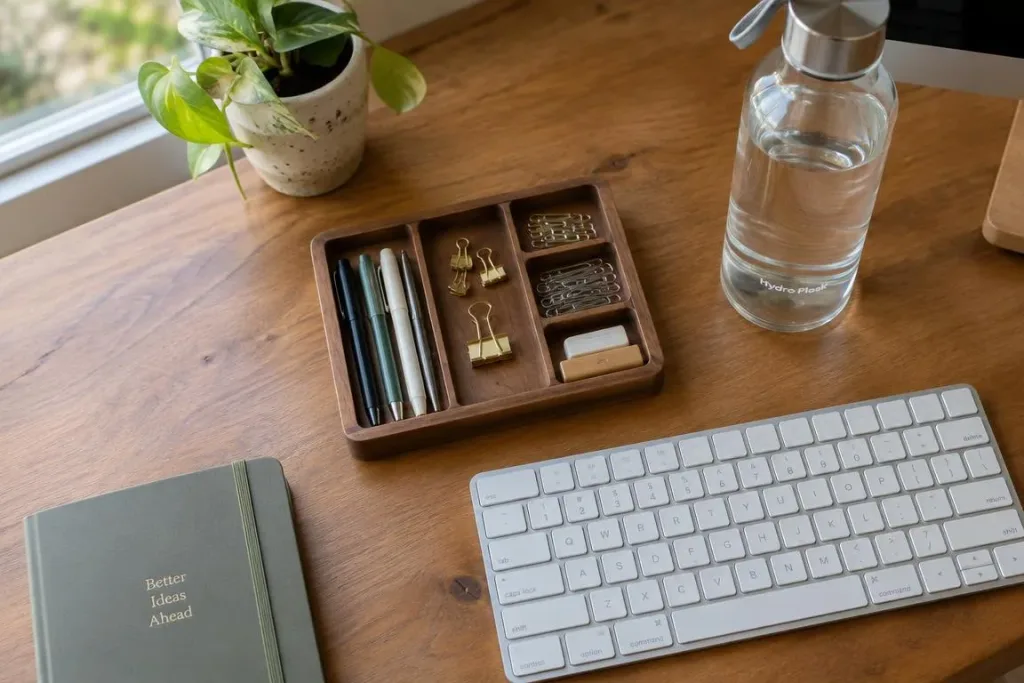
An uncluttered surface reduces everyday distractions and keeps essential tools close to hand.
How to clean your desk in 20 minutes
A fast workspace reset does not require hours of scrubbing or intricate storage systems. By following a structured cleaning checklist, you can transform a chaotic table into a functional work area in twenty minutes.
- Clear everything off the desk so you are left with an entirely bare surface.
- Sort every item into four distinct categories: keep, recycle, relocate, or rubbish.
- Wipe down the desktop surface thoroughly using an appropriate cloth and cleaning spray.
- Put frequently used items back on the desk within easy arm’s reach.
- Group similar objects together so writing instruments, tech accessories, and paper stay separate.
- Label or contain smaller items inside compact tins, shallow boxes, or small trays.
- Put cables and chargers together in one dedicated corner or through a cable clip.
- Keep only what you genuinely need for your immediate work on the main surface.
- Take a quick photo of the finished space to serve as a visual reference for future tidy sessions.
Sticking to these clear steps keeps your efforts focused and prevents you from drifting into prolonged sorting projects. Once the primary surface is clean, you can return to your work with renewed energy.
Desk organisation ideas that actually work
Effective desk organisation relies on functional, low-maintenance habits rather than expensive accessories. Choosing simple containers and sensible layouts helps you keep your surface tidy throughout the working week.
Stationery and Paper
Use a shallow wooden or cardboard tray for everyday pens, and place active paperwork inside a single clearly labelled folder.
Cable Management
Attach a simple desk clip or adhesive lead guide to keep charging wires from dropping behind the table or tangling.
Vertical Storage
Introduce a small monitor riser or compact shelf to elevate displays and slide your keyboard out of the way when writing.
A small desktop whiteboard or paper planner provides a visual holding area for urgent reminders, preventing loose sticky notes from covering your monitor frame. Reserving a specific dish for your keys, phone, and wallet also prevents personal pocket clutter from spilling across your workspace.
Finally, maintain a single “to do” pile for incoming forms, letters, or reading materials. Review this pile at the end of each week so papers do not linger indefinitely on your work surface.
What to keep on your desk
Limiting desktop items to the tools you use every day creates a spacious environment that encourages concentration. A minimal workstation reduces visual competition, helping your eyes rest naturally on your current task.
- Laptop or desktop monitor positioned at an ergonomic eye level.
- Notebook and a reliable pen for capturing spontaneous thoughts and daily priorities.
- Phone or charging stand set slightly away from your primary writing hand.
- Water bottle or insulated cup to maintain regular hydration throughout the day.
- A small personal item, such as a framed postcard or pebble, that brings a subtle touch of warmth.
- A planner or dedicated to-do list outlining your core goals for the session.
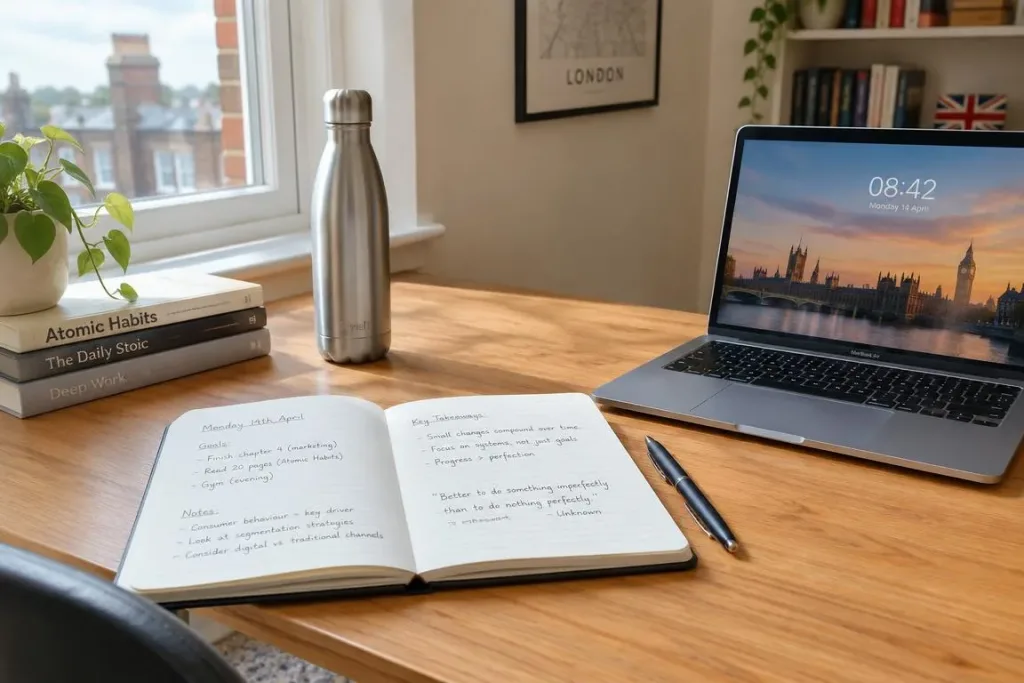
Keeping only daily essentials on the desktop creates plenty of room for creative work.
What to remove from your desk
Most workspace mess consists of items that drifted onto the desk during busy moments and never left. Old till receipts, discarded wrappers, and cold mugs quickly crowd out functional working space if left unchecked.
Duplicate stationery, redundant cables, and broken electronic accessories also collect dust and create unnecessary visual friction. Sorting these items into sensible recycling or storage paths clears the way for productive study and planning.
| Item | Action | Handling Notes |
| Old receipts | Recycle | Discard or scan necessary records digitally |
| Empty mugs | Relocate | Return straight to the kitchen sink |
| Spare stationery | Relocate | Store surplus pens inside a storage drawer |
| Broken cables | Recycle | Drop off at an electrical recycling point |
| Pocket items | Relocate | Place inside a dedicated hallway tray |
| Unused gadgets | Donate | Pass functional equipment to a community group |
Be honest about items you have not touched in several months. If a tool or reference book has not served a purpose recently, file it neatly in a cupboard or pass it along to someone who can put it to good use.
Clean Your Desk Day and Camp New York
A tidy desktop provides more than just a neat place to work; it gives you the mental room to consider your wider plans and personal ambitions. When your physical surroundings are clear, sorting through forms, drafting personal statements, and researching upcoming opportunities feels far more manageable.
Once the desk is clear, it is much easier to see what you want to do next. For some people, that means planning a summer adventure, learning new skills and applying for a role at an American summer camp.
Setting aside dedicated space to review your CV and explore international programmes allows you to approach your application with clarity. An organised desk gives you the breathing room needed to map out an exciting journey abroad.
What a camp summer could look like
Spending a summer working at a camp in the United States offers an experience far removed from standard desk-bound routines. It invites you to step away from indoor workstations and spend your days outdoors guiding activities and collaborating with others.
A Dynamic Setting
Living and working in a fresh environment allows you to connect with people from around the globe while supporting young people through sports, outdoor pursuits, or creative arts.
Transferable Skills
Leading camp sessions builds hands-on skills in communication, teamwork, and practical problem-solving that prove invaluable long after the summer ends.
A camp placement offers a fulfilling contrast to everyday office or university patterns, providing memorable challenges and friendships that stay with you for years to come.

Working at summer camp provides a memorable change of pace from indoor desk routines.
Frequently asked questions
What is Clean Your Desk Day?
Clean Your Desk Day is an informal awareness day that encourages people to tidy, declutter, and organise their workspaces to promote focus and productivity.
When is Clean Your Desk Day?
The day is observed as an informal annual event, though the exact timing varies across different workplace calendars and you can take part whenever your workspace requires a reset.
How do I clean my desk quickly?
Remove everything from the surface, wipe the desktop clean, and return only essential items while sorting the remainder into recycle, relocate, or rubbish piles.
What should I keep on my desk?
Keep only daily essentials, such as your computer, a notebook, a pen, your phone or charger, a water bottle, and an active planner.
How can I stop my desk getting messy again?
Spend three minutes at the end of each working day returning mugs to the kitchen, filing loose papers, and clearing away temporary clutter.
Do I need a big desk to stay organised?
No, small desks remain organised easily by using vertical risers, shallow drawer trays, and strict limits on what stays on the surface.
Make space for what’s next
Taking time to declutter your work area is a straightforward, practical way to refresh your mindset and clear visual distractions from your daily routine. Once your desk is clear, why not use the space to plan your next adventure? Explore summer camp jobs with Camp New York, check the current requirements and see where your skills could take you.