
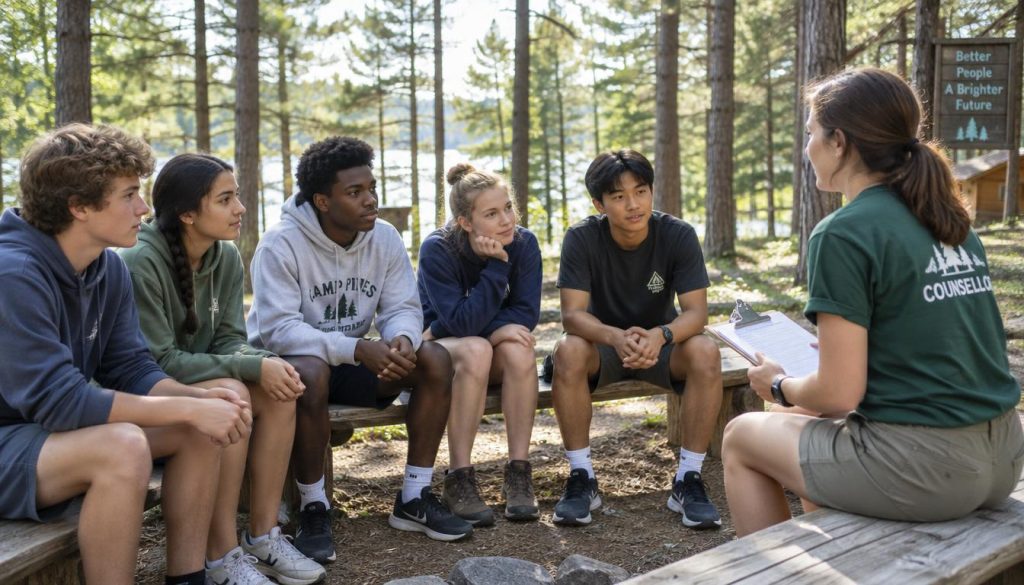
Personal growth for young people often occurs through small, ordinary moments. Stepping into an unfamiliar group, attempting a new activity, asking for clarification, or sharing responsibility for a daily chore all create practical opportunities to develop maturity. A supportive summer camp environment allows teenagers to test these abilities outside familiar school and home environments.
The extent of this developmental progress depends heavily on programme quality, individual readiness, and caring supervision. Thoughtful camp counsellors and structured leadership provide the safety net teenagers need to explore their potential with steady guidance.
Building confidence through achievable challenges
Confidence rarely arrives as an overnight transformation. Instead, teenage confidence and independence build progressively as individuals encounter novel situations, manage initial hesitation, and experience steady progress through effort. Summer camps offer structured settings where teenagers can step outside routine habits without the pressure of formal academic grading.
Realistic progress relies on encouragement and persistence rather than competitive outcomes or extroverted performance. Illustrative scenarios demonstrate how confidence develops across different camp environments:
Trying Unfamiliar Activities
Speaking up during a group planning meeting or taking a modest role in an evening sketch allows a hesitant teenager to share ideas publicly. Learning a practical skill, such as knot-tying or camp cooking, demonstrates that competence comes through steady practice.
Persisting Through Hesitation
Asking a counsellor for help when instructions seem confusing reinforces personal advocacy. Attempting a low-ropes task a second time after slipping teaches that temporary setbacks are normal parts of learning rather than personal failures.
Developing independence without being left unsupported
Living away from home presents immediate, age-appropriate responsibilities. Teenagers at camp manage personal belongings, keep sleeping quarters organised, prepare gear for scheduled activities, and arrive on time. These daily tasks foster self-reliance in practical, tangible ways.
Genuine independence does not mean coping entirely alone in an unstructured environment. Knowing when to ask an adult for assistance is a fundamental life skill that camp routines actively reinforce. A well-managed camp maintains clear supervision, consistent schedules, and established safety protocols rather than granting unrestricted freedom.
Healthy teenage independence develops best when clear expectations and adult safety nets exist alongside personal freedom. Campers practise making daily decisions while counsellors monitor wellbeing and provide guidance whenever challenges arise.
Practising friendship and communication skills
Camp brings together young people from varied schools, geographic areas, and personal backgrounds. This social setting provides a fresh start away from pre-existing school reputations or rigid peer hierarchies. Meeting new peers encourages teenagers to practise active listening, initiate conversations, and navigate differing viewpoints.
Building summer camp friendships takes time, patience, and mutual respect. Quieter participants do not need to adopt an outgoing persona to belong, as deep connections frequently develop during quiet craft sessions, shared meal duties, or walks between activity areas. Counsellors play an important role by noticing social dynamics and helping all campers feel included.
Social development at camp embraces different temperaments. A reflective teenager who listens carefully contributes just as much to communal living as an outspoken peer leading a group cheer.
Learning teamwork and shared responsibility
Cooperation forms the foundation of daily residential camp life. Group cabin living requires teenagers to negotiate shared spaces, establish fair cleaning rotas, and respect communal equipment. These collective responsibilities show teenagers that individual actions directly influence the comfort and wellbeing of their peers.
Structured group activities further highlight the necessity of teamwork at summer camp. For instance, when a group designs a campsite layout or prepares a joint musical performance, members must pool ideas, delegate tasks, and negotiate compromises. Effective collaboration teaches young people to value different strengths, take turns, and celebrate shared accomplishments.
- Listening to suggestions from all group members
- Sharing communal gear and cleaning responsibilities fairly
- Encouraging teammates when tasks become physically demanding
Collaborative Habits
- Appreciation for diverse skill sets and approaches
- Stronger conflict-resolution and negotiation skills
- Deeper personal investment in collective achievements
Growth Outcomes
Finding opportunities to lead
Leadership skills for teenagers do not require formal committee roles or badges of authority. Meaningful leadership at summer camp frequently surfaces in quiet, everyday actions that support group cohesion. When teenagers step forward to support others, they build authentic interpersonal responsibility.
Camper leadership must remain distinct from staff employment or unsupervised responsibility for other children. Counsellors retain ultimate oversight while encouraging teenagers to practise responsible initiative through manageable peer contributions:
- Welcoming a hesitant peer into a meal table conversation.
- Offering constructive encouragement to a teammate during an athletic match.
- Proposing an inclusive plan during an open cabin discussion.
- Taking personal initiative to tidy shared equipment without being prompted.
- Modelling calm, respectful behaviour during group disagreements.
Handling setbacks and developing problem-solving skills
Not every camp activity goes according to plan. Rainstorms disrupt outdoor hikes, sports matches end in defeat, and minor personal disagreements occasionally happen in shared cabins. Navigating these everyday disappointments provides valuable training in emotional regulation and practical problem-solving.
Resilience develops when supportive adults help teenagers reflect on challenging moments, examine alternative responses, and try again. Staff guide teenagers to view setbacks as normal occurrences rather than insurmountable barriers. Crucially, building resilience never involves tolerating bullying, emotional mistreatment, or unsafe living conditions.
Developing resilience requires a safe, compassionate environment. Camps maintain strict anti-bullying policies, and counsellors step in promptly whenever safety, dignity, or mental wellbeing is compromised.
Discovering interests beyond the classroom
Summer programmes introduce teenagers to varied pursuits that may not feature in standard school timetables. Outdoor pursuits, creative arts, theatre workshops, and team athletics give young people opportunities to discover emerging passions. Because these activities do not carry letter grades, teenagers feel greater freedom to experiment without fear of academic penalty.
Curiosity and active participation take precedence over competitive excellence. A camper might discover an affinity for pottery, wilderness navigation, or set painting simply by having unstructured time to explore. Specific offerings vary widely between camps, making individual programme research essential.
Creative Expression
Visual arts, drama, and acoustic music allow teenagers to explore personal expression in relaxed, non-judgmental settings.
Outdoor Skills
Supervised hiking, orienteering, and shelter building foster environmental awareness and practical outdoor competence.
Recreational Sport
Casual team games emphasise physical movement, fair play, and fun over rigid competitive pressure.
Understanding different backgrounds and perspectives
Many summer camps draw participants and staff members from diverse geographic, cultural, and socio-economic backgrounds. Living alongside people with distinct viewpoints offers natural opportunities for cultural exchange at summer camp. Teenagers learn to ask polite questions, listen with empathy, and dismantle unfounded preconceptions.
Exposure alone does not automatically create deep cultural understanding. Counsellors actively cultivate an inclusive atmosphere where differences receive respect and common values emerge naturally. Through shared daily living, teenagers recognise that shared laughter and mutual support easily transcend regional or cultural boundaries.
Respectful dialogue flourishes when camps establish ground rules of mutual kindness. Young people learn to appreciate varied worldviews while discovering universal common ground with peers from distant communities.
Why positive camp counsellors matter
Camp counsellor role models represent the core support structure of any camp programme. These young adult mentors bridge the gap between authority figures and friends, offering approachable guidance that resonates with teenagers. When counsellors model maturity, fairness, and active listening, campers feel safe exploring new skills.
Counsellors carry significant safeguarding responsibilities and work strictly within established organisational guidelines. While counsellors are not professional therapists, their presence provides consistent daily structure through defined practices:
- Delivering clear, consistent instructions for daily safety and schedules.
- Encouraging participation across activities without forcing reluctant campers.
- Listening carefully to personal worries and treating social conflicts seriously.
- Following strict child-safeguarding and mandatory incident-reporting procedures.
- Consulting senior camp leadership whenever complex medical or wellbeing needs emerge.
What eligible young adults can gain from supporting teenage campers
Mentoring teenage campers provides profound personal and professional developmental benefits for camp staff. Young adults working at a summer camp in the USA shoulder genuine accountability for group wellbeing, daily organisation, and safety. These responsibilities demand continuous communication, emotional patience, and sound decision-making.
The developmental gains of counsellors remain distinct from the benefits experienced by campers. Counsellors do not view teenage needs merely as training exercises; rather, staff growth occurs as a natural consequence of dedicated service. Navigating complex group dynamics abroad prepares young adults for future leadership roles across varied professional careers.
Interpersonal Leadership
Counsellors refine active mediation, conflict management, and public speaking skills while guiding lively groups of teenagers through daily camp schedules.
Adaptability and Resilience
Managing shifting schedules, unpredictable weather, and diverse emotional personalities instils practical maturity and professional resourcefulness.
What parents and applicants should ask about a camp
Every summer camp operates with distinct philosophies, facilities, staff ratios, and activity programmes. Both parents assessing camper suitability and young adults exploring counsellor positions should investigate specific operational details before making commitments. Thorough enquiries clarify how programmes manage supervision, safety, and daily camper life.
Key questions to ask during initial research include:
- Which specific age brackets and camper demographics does the programme serve?
- What arrival and orientation procedures help first-time campers settle comfortably?
- What training, mental health awareness, and supervision do counsellors receive prior to camper arrival?
- What clear channels exist for campers to report peer conflict, distress, or safety concerns?
- How does the facility accommodate dietary restrictions, medical conditions, and individual support needs?
- What degree of personal choice do teenagers have regarding activity participation?
- How does camp leadership manage safeguarding protocols and pastoral care standards?
| Camp experience | Skill teenagers can practise | How counsellors can help |
| Cabin living | Shared responsibility | Setting fair rotas, mediating small disputes, and establishing quiet hours. |
| Activity choice | Personal decision-making | Offering guidance on options while encouraging balanced participation. |
| Group challenges | Cooperative problem-solving | Facilitating structured reflection and keeping team interactions respectful. |
| Evening socials | Peer communication | Creating welcoming spaces where quieter campers connect comfortably. |
Frequently asked questions
How can summer camp help teenagers become more independent?
Summer camp requires teenagers to manage their belongings, keep to daily timetables, and make personal decisions without parental intervention. These daily routines foster self-reliance within a supervised, secure framework.
Can quieter teenagers enjoy camp?
Quieter teenagers often flourish at camp through small-group discussions, creative workshops, and nature-based pursuits. Attentive counsellors maintain inclusive environments where reflective participants feel valued without being pressured into extroverted behaviour.
Does camp help teenagers practise leadership?
Camp provides accessible opportunities to practise leadership through supporting peers, helping organise group chores, and contributing constructive ideas during shared tasks. These informal acts build interpersonal confidence without requiring official titles.
What role do counsellors play in teenage development?
Counsellors act as approachable role models who set behavioural expectations, listen to concerns, and support campers through unfamiliar challenges. Their steady presence provides reassurance while campers test new social and practical capabilities.
Is camp guaranteed to improve confidence?
Camp cannot offer an absolute promise of improved confidence, as individual outcomes vary according to personal readiness, camp culture, and group dynamics. However, well-run programmes provide structured opportunities where supported effort regularly encourages personal growth.
Can older teenagers apply to work with Camp New York?
Older teenagers who meet the programme’s specific minimum age and international eligibility criteria may apply for summer counsellor placements. Prospective applicants must review current programme prerequisites and visa regulations directly before applying.
Help create a positive summer camp experience
Meaningful teenage growth flourishes when adventurous, supportive environments align with conscientious adult guidance. Whether mastering practical camp tasks, cultivating patience during group challenges, or forming friendships across cultural boundaries, young people gain perspective that serves them well into adulthood.
Considering a counsellor role this summer?
Interested in supporting young people while developing your own skills? Explore summer camp jobs with Camp New York, check the current eligibility requirements and contact the team to discuss your next steps.