

Summer camp counselors are the heart and soul of every successful camp experience. As a counselor at Camp New York, you’ll have the opportunity to create lasting memories, develop valuable leadership skills, and make a meaningful impact on young campers’ lives. This comprehensive guide outlines the essential summer camp counselor job duties, qualifications, and the rewarding experiences that await you in this dynamic role.
What Does a Camp Counselor Do? Role Overview
Camp counselors serve as mentors, role models, and supervisors for campers throughout their summer camp experience. Your primary responsibility is ensuring campers have a safe, fun, and enriching time while developing new skills and building friendships. From leading activities to providing emotional support, camp counselors wear many hats and play a crucial role in creating a positive camp environment.
Camp counselors create memorable experiences through engaging group activities
Ready for an Unforgettable Summer?
Join our team of dedicated counselors and make a difference in children’s lives while having the summer of your life!
Supervision and Safety Responsibilities
The most important duty of a camp counselor is ensuring the safety and well-being of all campers. This responsibility encompasses various aspects of daily camp life and requires constant vigilance and attention to detail.
Daily Supervision Duties
As a camp counselor, you’ll be responsible for supervising campers throughout all daily activities, from morning wake-up to evening lights-out. This includes monitoring campers during:
- Meal times to ensure proper nutrition and behavior
- Recreational activities to prevent injuries
- Swimming and water activities with extra vigilance
- Transitions between activities to maintain organization
- Rest periods and quiet times
- Evening cabin/tent time and ensuring proper bedtime routines

Safety Protocol Implementation
Camp counselors must be familiar with and strictly adhere to all camp safety protocols. Your safety responsibilities include:
Emergency Procedures
Learning and implementing proper emergency protocols for various situations including medical emergencies, severe weather, and missing camper procedures.
First Aid & Health
Administering basic first aid for minor injuries, recognizing signs of illness, and promptly reporting health concerns to medical staff.
Risk Management
Identifying potential hazards, preventing dangerous situations, and maintaining appropriate counselor-to-camper ratios at all times.
“The safety of our campers is always our top priority. Camp counselors are trained to be proactive in identifying and addressing potential safety concerns before they become issues.”

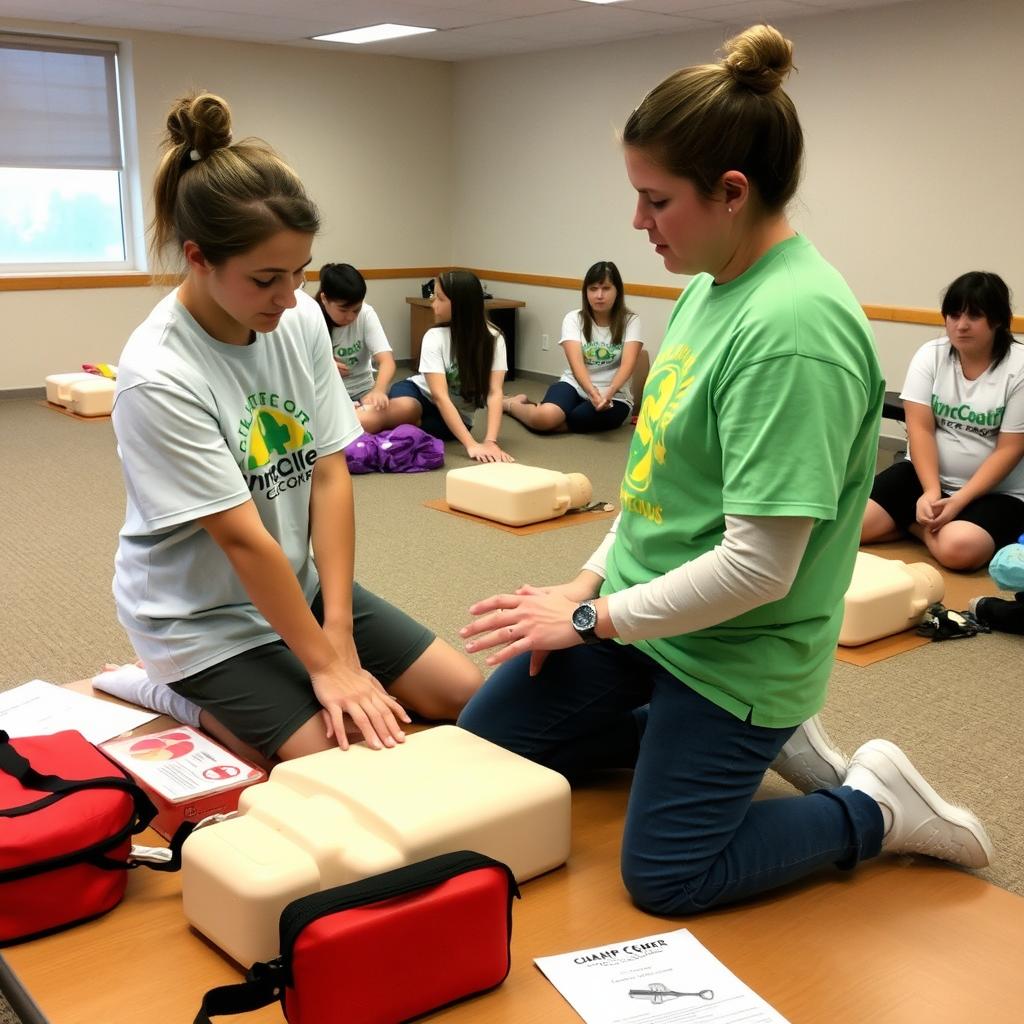
Learning and teaching basic safety skills is an essential part of a camp counselor’s responsibilities
Activity Planning and Leadership
One of the most rewarding summer camp counselor job duties is planning and leading engaging activities that create memorable experiences for campers. This aspect of the role allows you to showcase your creativity, leadership skills, and ability to inspire others.
Types of Activities You’ll Lead
Recreational Activities
- Team sports (soccer, basketball, volleyball)
- Swimming and water games
- Hiking and nature exploration
- Adventure activities (ropes courses, climbing)
Creative Activities
- Arts and crafts projects
- Music and singing sessions
- Drama and theatrical performances
- Creative writing and storytelling
Educational Activities
- Nature education and environmental awareness
- STEM-based learning projects
- Cultural awareness activities
- Life skills development

Creative activities allow counselors to inspire campers’ imagination and artistic expression
Activity Planning Process
As a camp counselor, you’ll be involved in the planning process for daily and special activities. This includes:
- Collaborating with fellow counselors and camp directors to develop activity ideas
- Creating detailed plans with clear objectives for each activity
- Preparing necessary materials and equipment in advance
- Adapting activities to accommodate different age groups and abilities
- Implementing backup plans for weather changes or unexpected circumstances

Leadership Skills Development
Leading activities provides an excellent opportunity to develop and refine your leadership skills. Effective activity leadership includes:
- Clearly communicating instructions and expectations
- Demonstrating enthusiasm that motivates campers to participate
- Managing group dynamics and ensuring inclusive participation
- Problem-solving when challenges arise
- Providing constructive feedback and encouragement
Share Your Talents With Campers!
Have special skills in sports, arts, or outdoor activities? We’re looking for counselors who can bring their unique talents to Camp New York!
Camper Development and Mentorship
Beyond organizing activities and ensuring safety, one of the most impactful summer camp counselor job duties is serving as a mentor and positive role model for campers. This aspect of the role allows you to make a lasting difference in young people’s lives.

Building trust and providing guidance are essential aspects of the counselor-camper relationship
Social and Emotional Support
Camp counselors play a crucial role in supporting campers’ social and emotional development. This includes:
- Helping campers adjust to being away from home
- Facilitating healthy friendship formation
- Teaching conflict resolution skills
- Boosting confidence and self-esteem
- Creating an inclusive environment where all campers feel valued
Homesickness Management
Counselors often help campers overcome homesickness by providing emotional support, keeping them engaged in activities, and helping them connect with new friends. Your empathy and patience can transform a homesick camper’s experience into a positive growth opportunity.
Character Development
As a positive role model, you’ll have the opportunity to foster important character traits and values in your campers:
Teamwork
Encouraging cooperation, communication, and mutual support through group activities and cabin/tent living.
Resilience
Teaching campers to persevere through challenges, learn from mistakes, and develop a growth mindset.
Responsibility
Helping campers develop independence by taking care of their belongings, following schedules, and contributing to the camp community.

Team-building activities help campers develop crucial social skills under counselor guidance
Skill Development
Camp counselors help campers develop new skills and discover hidden talents. This includes:
- Teaching activity-specific skills (sports techniques, artistic methods, outdoor skills)
- Encouraging campers to try new things outside their comfort zones
- Recognizing and nurturing individual talents and interests
- Celebrating achievements and progress, no matter how small
“The most rewarding part of being a camp counselor is watching a shy, uncertain camper transform into a confident, enthusiastic participant over the course of a summer. Those moments remind you why this job matters.”
Administrative Tasks and Responsibilities
While the fun activities and camper interactions are the most visible aspects of a camp counselor’s job, administrative tasks are equally important summer camp counselor job duties that keep the camp running smoothly and safely.
Record Keeping and Documentation
Camp counselors are responsible for maintaining various records and documentation, including:
- Daily attendance and headcounts
- Incident and accident reports
- Behavior logs and camper progress notes
- Activity participation records
- Health concerns or medication administration (as directed by medical staff)

Communication Responsibilities
Effective communication is essential for camp operations. Your communication duties will include:
Staff Communication
Participating in daily staff meetings, coordinating with activity specialists, and sharing important information with fellow counselors.
Parent Communication
Interacting professionally with parents during drop-off/pick-up, addressing concerns, and sharing positive feedback about their children’s experiences.
Camper Communication
Clearly conveying expectations, schedules, and instructions to campers in an age-appropriate manner.
Facility and Equipment Management
Camp counselors share responsibility for maintaining camp facilities and equipment:
- Conducting regular safety checks of activity areas and equipment
- Ensuring proper setup and cleanup of activity spaces
- Reporting maintenance issues or safety concerns
- Guiding campers in keeping living spaces clean and organized
- Properly storing and caring for camp equipment and supplies

Proper equipment management ensures activities run smoothly and safely
Emergency Procedures and Crisis Management
Being prepared for emergencies is one of the most critical summer camp counselor job duties. Camp counselors must be ready to respond quickly and effectively to various emergency situations to ensure camper safety.
Types of Emergencies
Camp counselors are trained to handle various emergency situations, including:
Medical Emergencies
- Injuries requiring first aid
- Allergic reactions
- Illness outbreaks
- Heat-related conditions
Environmental Emergencies
- Severe weather (thunderstorms, high winds)
- Wildfires
- Flooding
- Wildlife encounters
Facility/Operational Emergencies
- Missing camper procedures
- Unauthorized visitors
- Power outages
- Facility damage
First Aid Certification
Most camps require counselors to have current first aid and CPR certification. Camp New York provides training opportunities for qualified applicants who don’t yet have these certifications.
Emergency Response Protocols
As a camp counselor, you’ll be trained in specific emergency response protocols:
- Assessing the situation quickly and calmly
- Ensuring immediate safety of all campers
- Alerting appropriate staff members according to camp protocol
- Providing necessary first aid or support within your training limits
- Following evacuation procedures when required
- Maintaining calm among campers during emergencies
- Documenting incidents thoroughly after resolution

Crisis Prevention
The best emergency management starts with prevention. Camp counselors play a key role in preventing emergencies by:
- Conducting regular headcounts and maintaining proper supervision ratios
- Enforcing safety rules consistently
- Monitoring weather conditions and being prepared for changes
- Identifying and addressing potential hazards before they cause harm
- Knowing campers’ medical conditions and being alert to symptoms

Proactive safety education is a key responsibility of camp counselors
Qualifications and Skills for Success
To excel in fulfilling summer camp counselor job duties, certain qualifications, skills, and personal qualities are essential. Here’s what makes a successful camp counselor:
Required Qualifications
- Minimum age of 18 years (for most positions)
- High school diploma or equivalent
- Clean background check
- First Aid and CPR certification (or willingness to obtain)
- Physical ability to participate in camp activities
- Experience working with children (preferred)
Essential Skills
Leadership Skills
- Group management
- Decision-making
- Conflict resolution
- Leading by example
Communication Skills
- Clear instruction
- Active listening
- Age-appropriate explanations
- Positive reinforcement
Organizational Skills
- Time management
- Activity planning
- Record keeping
- Resource management
Personal Qualities
Beyond formal qualifications, these personal qualities contribute significantly to success as a camp counselor:

Enthusiasm and positive energy are contagious qualities that make exceptional counselors
Character Traits
- Patience and understanding
- Adaptability and flexibility
- Responsibility and reliability
- Enthusiasm and positive attitude
- Creativity and resourcefulness
Interpersonal Abilities
- Empathy and compassion
- Cultural sensitivity
- Teamwork and collaboration
- Approachability
- Sense of humor
Professional Attributes
- Professionalism and maturity
- Ethical decision-making
- Boundary-setting
- Self-motivation
- Growth mindset
A Day in the Life: Camp Counselor Daily Schedule
Understanding the typical daily schedule helps prospective counselors envision how they’ll fulfill their summer camp counselor job duties throughout the day. While schedules may vary, here’s a general idea of what to expect, but remember every Summer Camp is different:
| Time | Activity | Counselor Responsibilities |
| 6:30 – 7:00 AM | Counselor Wake-up | Prepare for the day, review schedules, check in with co-counselors |
| 7:00 – 7:30 AM | Camper Wake-up | Wake campers, supervise morning routines, ensure proper hygiene |
| 7:30 – 8:15 AM | Breakfast | Supervise meal, ensure all campers eat properly, manage behavior |
| 8:15 – 8:45 AM | Cabin/Tent Clean-up | Guide campers in cleaning living spaces, prepare for inspection |
| 9:00 – 10:30 AM | Morning Activity Period 1 | Lead or assist with scheduled activities, ensure safety |
| 10:45 – 12:15 PM | Morning Activity Period 2 | Lead or assist with scheduled activities, ensure safety |
| 12:30 – 1:15 PM | Lunch | Supervise meal, facilitate conversation, manage behavior |
| 1:15 – 2:15 PM | Rest Hour/Quiet Time | Supervise quiet activities, allow for rest, prepare for afternoon |
| 2:30 – 4:00 PM | Afternoon Activity Period | Lead or assist with scheduled activities, often water-based |
| 4:15 – 5:30 PM | Free Choice/Elective Time | Supervise various activity stations, ensure safety |
| 5:45 – 6:30 PM | Dinner | Supervise meal, facilitate conversation, manage behavior |
| 7:00 – 8:30 PM | Evening Program | Lead or assist with campfires, games, or special events |
| 8:30 – 9:30 PM | Cabin/Tent Time | Supervise evening routines, facilitate group discussions |
| 9:30 – 10:00 PM | Lights Out (age-dependent) | Ensure campers are settled, provide comfort as needed |
| 10:15 – 11:00 PM | Staff Meeting | Discuss day’s events, plan for tomorrow, address any issues |

Evening campfire activities are often the highlight of the camp day for both campers and counselors
Time Off
Camp counselors typically receive scheduled time off during the week. This allows for rest, personal errands, and recharging. The specific time-off schedule varies by camp, but most counselors can expect at least 24 consecutive hours off each week.
Benefits and Rewards of Being a Camp Counselor
While fulfilling summer camp counselor job duties requires hard work and dedication, the position offers numerous benefits and rewards that make it a truly valuable experience.
Professional Development
Working as a camp counselor helps you develop transferable skills that are valuable in many career paths:
- Leadership and management experience
- Problem-solving under pressure
- Effective communication with diverse audiences
- Conflict resolution and mediation
- Program planning and implementation
- Teamwork and collaboration

Personal Growth
Beyond professional skills, being a camp counselor fosters significant personal growth:
Self-Confidence
Successfully managing groups, solving problems, and overcoming challenges builds lasting confidence that extends beyond camp.
Resilience
Learning to adapt to changing circumstances, manage stress, and maintain a positive attitude in challenging situations.
Empathy
Developing deeper understanding of others’ perspectives, needs, and emotions through close work with diverse campers and staff.
Meaningful Impact
Perhaps the most rewarding aspect of being a camp counselor is the positive impact you have on young people’s lives:

The moments of breakthrough and growth are what make camp counseling truly rewarding
“Years later, former campers still reach out to tell me how their camp experiences shaped them. There’s nothing more rewarding than knowing you’ve made a lasting positive impact on someone’s life journey.”
Tangible Benefits
In addition to the intangible rewards, camp counselors at Camp New York receive:
- Competitive salary with opportunities for bonuses
- Room and board included during employment
- Professional training and certifications
- Letters of recommendation for future employment
- Networking opportunities with professionals in education and youth development
- Potential for advancement to leadership positions
Join Our Team: Application Process
If you’re excited about fulfilling these summer camp counselor job duties and making a difference in children’s lives, we invite you to apply to join our team at Camp New York.
Application Steps
Step 1: Online Application
Complete our comprehensive online application form, including your background, experience, and specific skills or activity specialties.
Step 2: Interview
Selected applicants will be invited for a virtual or in-person interview to discuss qualifications, experience, and fit with our camp philosophy.
Step 3: Get Hired!
After a successful interview with a camp director, you will have been offered your dream camp job. Successful interview candidates will also undergo a thorough background check and reference verification process. Then time to sort your Embassy appointment and flights before heading to your camp in America.

Join our diverse team of dedicated counselors at Camp New York
Ready for the Best Summer of Your Life?
Apply now to become a Camp New York counselor and embark on a rewarding journey of leadership, fun, and making a difference!
When should I apply for a summer camp counselor position?
We recommend applying as early as possible. January or February for the upcoming summer season are the busiest. However, we continue accepting applications until all positions are filled, typically by late April. Early application increases your chances of securing a position.
Do I need previous experience to be a summer camp counselor?
While previous experience working with children is beneficial, it’s not always required. We value candidates who demonstrate leadership potential, enthusiasm, responsibility, and a genuine interest in working with children. Relevant experience can include babysitting, tutoring, coaching, or volunteer work with youth organizations.
What training will I receive before camp starts?
All counselors participate in a comprehensive pre-camp training program that typically lasts 5-7 days. Training covers child development, activity leadership, safety procedures, emergency protocols, behavior management, and team building. Specialized training is provided for specific activity areas. First aid and CPR certification is also included if needed.
Conclusion: The Impact of Camp Counselors
Summer camp counselor job duties encompass a wide range of responsibilities, from ensuring camper safety to planning engaging activities, providing mentorship, and handling administrative tasks. While the role is demanding, it offers unparalleled opportunities for personal and professional growth.
Camp counselors are more than just activity leaders or supervisors – they are mentors, role models, and sometimes even life-changers for the young people they work with. The skills and experiences gained as a camp counselor provide valuable preparation for future careers in education, psychology, recreation, business leadership, and many other fields.
At Camp New York, we’re proud of our exceptional counselor team and the positive, supportive environment they create for our campers each summer. If you’re ready to take on this rewarding challenge and make a meaningful difference in children’s lives, we encourage you to apply and join our camp family.
Make This Summer Count!
Join our team of dedicated counselors and create memories that last a lifetime – for both you and your campers.