

Lake District Photography Locations
The Lake District, a UNESCO World Heritage Site, offers some of the UK’s most breathtaking landscapes for photographers. With its dramatic fells, serene lakes, and ever-changing light, this corner of Cumbria has inspired artists for centuries. Whether you’re a seasoned professional or an enthusiastic amateur, these ten spectacular Lake District photography locations will help you capture truly memorable images.
1. Wastwater
Often voted Britain’s favourite view, Wastwater offers a dramatic landscape that epitomises the rugged beauty of the Lake District. England’s deepest lake is flanked by the imposing screes of Illgill Head on one side and the majestic peaks of Yewbarrow, Great Gable and Scafell Pike on the other.

Wastwater with the dramatic scree slopes and Scafell Pike in the background
Photography Tips for Wastwater
Best Time to Visit: Early morning offers the best chance of still water for reflections, while late afternoon light illuminates the western faces of the mountains beautifully.
Composition Ideas: Use the shoreline boulders as foreground interest, or capture the classic view looking up the lake towards the mountain amphitheatre. A wide-angle lens (16-24mm) works well here to capture the scale.
GPS Coordinates: 54.4427° N, 3.2922° W
Parking: National Trust car park at Wasdale Head or the smaller ‘honesty box’ car park at Overbeck Bridge.
Pro Tip: A polarising filter helps manage reflections and enhances the rich blue of the water against the dark screes.
2. Buttermere
Buttermere offers a perfect balance of accessibility and stunning scenery. The lake is surrounded by fells including Haystacks (Wainwright’s favourite) and High Stile, creating a magnificent backdrop for photography.

The iconic pine trees at the head of Buttermere create a classic Lake District composition
Photography Tips for Buttermere
Best Time to Visit: Dawn often provides mirror-like reflections, especially in autumn when the surrounding foliage adds vibrant colour.
Composition Ideas: The famous line of pine trees at the head of the lake makes for an iconic shot. The full circuit walk (about 4.5 miles) offers numerous composition opportunities.
GPS Coordinates: 54.5419° N, 3.2752° W
Parking: National Trust car park in Buttermere village or at Gatesgarth Farm.
Pro Tip: A 6-stop ND filter can help create silky water effects even in daylight hours.
3. Blea Tarn
Nestled between Great and Little Langdale, Blea Tarn offers one of the most quintessential Lake District views. This small mountain tarn provides a perfect foreground to the dramatic Langdale Pikes, creating a scene that has inspired photographers for generations.

Blea Tarn with the magnificent Langdale Pikes reflected in its waters
Photography Tips for Blea Tarn
Best Time to Visit: Early morning for mist and reflections, or sunset when the Langdale Pikes catch the last light.
Composition Ideas: Use the shoreline boulders as foreground interest. The Scots pines on the eastern shore make excellent framing elements.
GPS Coordinates: 54.4227° N, 3.0975° W
Parking: National Trust car park directly adjacent to the tarn (note: requires permit for commercial photography).
Pro Tip: Visit after rainfall when the tarn is full and the surrounding landscape is at its most vibrant.
4. Ullswater
The second largest lake in the Lake District, Ullswater offers a diverse range of photographic opportunities along its serpentine nine-mile length. From the dramatic mountains at its southern end to the gentler landscapes of the north, Ullswater has something for every photographer.

Ullswater’s serpentine shape creates beautiful compositions, especially in misty conditions
Photography Tips for Ullswater
Best Time to Visit: Spring for the daffodils at Glencoyne Bay (Wordsworth’s inspiration) or autumn for woodland colours. Misty mornings can be spectacular.
Composition Ideas: The Duke of Portland Boathouse makes a striking focal point. Glenridding Pier with the steamers offers classic Lake District scenes.
GPS Coordinates: 54.5754° N, 2.8724° W (Glenridding)
Parking: Car parks at Glenridding, Pooley Bridge, and Aira Force.
Pro Tip: A telephoto lens (70-200mm) works well to compress the layers of fells along the lake’s length.
5. Rydal Water and Caves
Rydal Water may be small, but it offers exceptional photographic potential. The combination of the lake, surrounding fells, and the intriguing Rydal Caves creates diverse shooting opportunities within a compact area.

Rydal Water offers beautiful reflections and access to the photogenic Rydal Cave
Photography Tips for Rydal Water
Best Time to Visit: Autumn for spectacular colours or winter for dramatic, frosty scenes.
Composition Ideas: Rydal Cave makes for dramatic interior shots (bring a tripod). The view from Loughrigg Terrace across the water is spectacular.
GPS Coordinates: 54.4484° N, 2.9935° W
Parking: White Moss car park between Rydal and Grasmere, or limited parking at Pelter Bridge.
Pro Tip: For cave photography, bracket your exposures to capture both the dark interior and bright exterior.
6. Tarn Hows
This man-made but utterly picturesque tarn is surrounded by woodland and offers views to the Langdale Pikes and Helvellyn range. Its accessibility makes it perfect for photographers who prefer not to venture far from the car park.

Tarn Hows offers accessible beauty with a circular walk providing multiple composition options
Photography Tips for Tarn Hows
Best Time to Visit: Autumn for spectacular woodland colours or early morning for mist rising from the water.
Composition Ideas: The circular walk offers constantly changing perspectives. Look for reflections and framing opportunities through the trees.
GPS Coordinates: 54.4008° N, 3.0199° W
Parking: National Trust car park (paid).
Pro Tip: Visit on weekdays or very early/late to avoid crowds in your compositions.
7. Derwentwater
Often called the “Queen of the Lakes,” Derwentwater offers a perfect blend of accessible shoreline and dramatic mountain backdrops. The lake’s islands add interest to compositions, while the surrounding fells provide a magnificent setting.

Derwentwater with the distinctive profile of Catbells in the background
Photography Tips for Derwentwater
Best Time to Visit: Dawn for still waters and mist, or sunset when the western fells catch the last light.
Composition Ideas: The Keswick landing stages make excellent foreground elements. Friar’s Crag offers classic views across the lake to Catbells.
GPS Coordinates: 54.5860° N, 3.1390° W (Keswick)
Parking: Theatre by the Lake car park or Keswick town centre.
Pro Tip: A 10-stop ND filter can smooth the water and clouds for minimalist long exposures.
8. Castlerigg Stone Circle
One of Britain’s most atmospheric ancient monuments, Castlerigg Stone Circle sits on a plateau surrounded by some of the Lake District’s highest fells. This 5,000-year-old site offers unique photographic opportunities that combine history with landscape.

The ancient Castlerigg Stone Circle with its dramatic mountain backdrop
Photography Tips for Castlerigg
Best Time to Visit: Sunrise or sunset for dramatic lighting, or winter when snow caps the surrounding fells.
Composition Ideas: Use the stones as foreground interest with Blencathra or Skiddaw as a backdrop. Consider night photography to capture star trails.
GPS Coordinates: 54.6030° N, 3.0972° W
Parking: Small roadside car park or layby on the approach road.
Pro Tip: Visit during the week or in off-season to avoid other visitors in your shots.
9. Ashness Bridge
This picturesque packhorse bridge is one of the Lake District’s most photographed spots. The classic view looks over the bridge towards Derwentwater and Skiddaw, creating a quintessential Lake District scene that combines human heritage with natural beauty.

The historic Ashness Bridge frames views towards Derwentwater and Skiddaw
Photography Tips for Ashness Bridge
Best Time to Visit: Early morning to avoid crowds, or autumn when the surrounding trees add colour.
Composition Ideas: Shoot from below the bridge looking up through the arch, or from above capturing the bridge with Derwentwater beyond.
GPS Coordinates: 54.5575° N, 3.1362° W
Parking: Small parking area near the bridge, but it fills quickly in peak season.
Pro Tip: A variable ND filter helps control the water flow beneath the bridge for the perfect silky effect.
10. Hodge Close Quarry
For something completely different, Hodge Close offers dramatic industrial heritage within the Lake District landscape. This former slate quarry provides striking compositions with its sheer walls, emerald waters, and unusual perspectives.
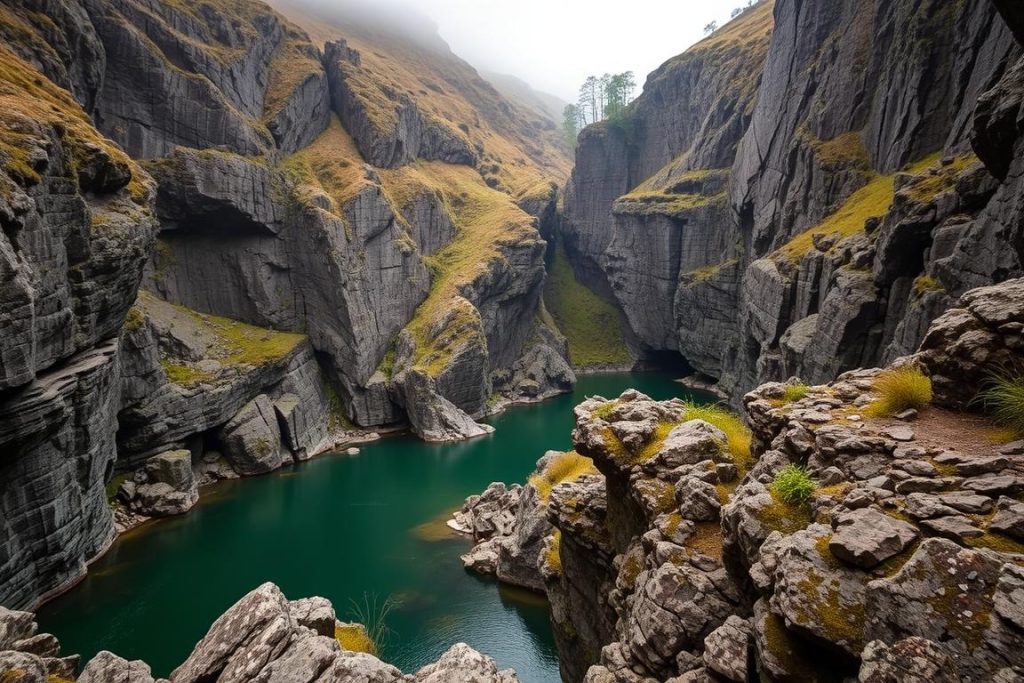
The dramatic walls and emerald waters of Hodge Close Quarry offer unique photographic opportunities
Photography Tips for Hodge Close
Best Time to Visit: Overcast days work well to manage the extreme contrast between the dark quarry and bright sky.
Composition Ideas: Capture the scale using people (safely positioned) for reference. Look for reflections in the quarry pool.
GPS Coordinates: 54.4222° N, 3.0646° W
Parking: Small car park near the quarry entrance.
Pro Tip: Exercise extreme caution as the quarry has unfenced drops. Stay on established paths and well back from edges.
5 Essential Lake District Photography Tips

Be prepared for rapidly changing weather conditions in the Lake District
- Weather Preparation: The Lake District’s weather can change rapidly. Pack waterproof covers for your gear and graduated ND filters to handle the varied light conditions that mountain weather creates.
- Timing is Everything: The fells can create their own weather systems. Even on cloudy days, be patient – breaks in the clouds can create dramatic spotlight effects on the landscape.
- Respect the Environment: Stick to established paths to protect the fragile fell environment. The National Trust manages many locations and requires permits for commercial photography.
- Beyond the Obvious: While the classic views are stunning, look for unique perspectives. Get up high on the fells for panoramic views or focus on intimate details of stone walls, weathered trees, or flowing becks.
- Local Knowledge: Check tide times for coastal areas and sunrise/sunset directions for specific locations. Apps like PhotoPills or The Photographer’s Ephemeris are invaluable for planning.
Frequently Asked Questions
Can I fly drones in the Lake District?
Drone use in the Lake District is restricted in many areas. You must follow Civil Aviation Authority regulations and obtain permission from landowners. The National Park Authority prohibits drone flights from their land without prior permission, which is generally only granted for research, education, or management purposes. Always check current regulations before flying.
What are the best sunset spots in the Lake District?
For spectacular Lake District sunsets, consider Wastwater (looking east towards the screes), Ashness Jetty on Derwentwater, the summit of Catbells, or Blea Tarn facing the Langdale Pikes. Western-facing shores of lakes often provide the best light conditions as the sun sets behind you, illuminating the fells.
Do I need a permit for photography in the Lake District?
For personal photography, no permits are required. However, commercial photography on National Trust land (which includes many popular locations) requires permission and potentially a fee. Always check with the landowner if you’re shooting professionally or using a substantial setup like tripods in busy areas.
Capture Your Lake District Memories
The Lake District offers endless photographic possibilities beyond these ten locations. Each valley, fell, and lake has its own character that changes with the seasons and weather. Take time to explore, be patient with the conditions, and you’ll return with images that capture the true essence of this magnificent landscape.
Want to Discover Hidden Lake District Photography Locations?
From that experience you can help teach photography at Camp New York – apply now!